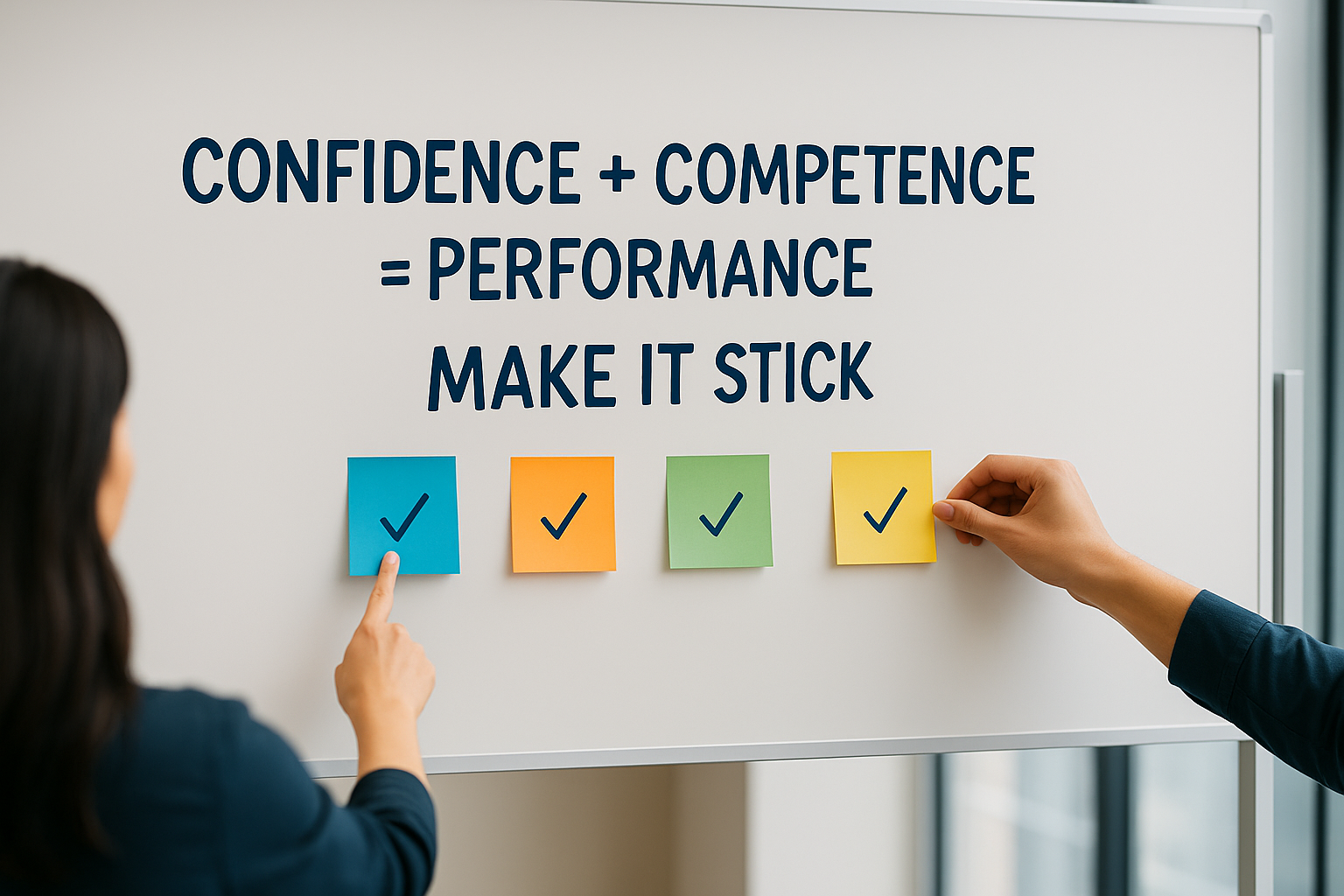
Confidence without competence creates risk. Competence without confidence creates hesitation. You...
 Personality assessments for teams are often introduced to improve communication, collaboration, and overall team dynamics. But many teams struggle to see lasting impact. The insights may feel useful in the moment, but they rarely change how work actually gets done. The difference comes down to whether personality insight becomes part of daily behavior or stays a one-time conversation.
What Teams Expect From a Personality Assessment for Teams
Teams typically invest in personality assessments for teams with clear expectations:
- Improve communication and reduce misunderstandings
- Build stronger collaboration across different working styles
- Increase self-awareness and team awareness
- Create a more positive and productive team environment
These expectations are valid, but they are often defined at a high level. Teams expect insight to translate into better outcomes without defining how those insights apply to daily work.
Most teams don’t struggle with awareness. They struggle with application.
Where Personality Assessments Stay Surface-Level
In many cases, personality assessments create initial excitement but fail to drive lasting change:
- Insights are discussed but not applied consistently
- Teams remember labels but not behaviors
- There is no shared way to apply insights in real situations
- Results are not integrated into workflows or team norms
This is the same pattern seen in leadership development programs that stop at awareness instead of building consistency.
How Personality Differences Show Up in Daily Work
Teams don’t experience personality insight in theory. They experience it in how people work together every day:
- Communication styles affect clarity, tone, and interpretation
- Decision-making approaches vary across individuals
- People respond differently to pressure and deadlines
- Preferences for feedback and recognition are not the same
These differences often explain why teams struggle with friction that feels repetitive or hard to resolve. In many cases, it shows up in the same communication breakdowns behind difficult conversations.
The issue is not that teams lack insight. It is that they lack a consistent way to apply it.
What Changes When Teams Apply Personality Insight Consistently
When team personality assessments move beyond insight and become part of how teams operate, the impact becomes visible:
- Communication becomes more direct and intentional
- Misunderstandings are reduced instead of being repeated
- Teams align faster in decision-making
- Trust builds through more predictable interactions
This is often where teams start to see the connection between everyday behavior and broader outcomes, including the risks outlined in how misaligned culture costs organizations.
The Role of Managers in Reinforcing Personality Insight
Managers play a critical role in whether personality insight is used or forgotten. This is often where early warning signs of breakdown appear, similar to what is outlined in warning signs of toxic leadership:
- Set expectations for how insights apply to communication
- Model behavior in feedback, conflict, and decision-making
- Coach team members using a shared understanding of differences
- Reinforce consistency over time
Without reinforcement, teams revert to default habits. And when that happens, the assessment becomes a reference point instead of a working tool.
See Where Personality Insight Is Breaking Down
If personality insight isn’t showing up in daily work, the issue is rarely the assessment itself. It is how consistently those insights are applied across the team.
Take the True Colors Culture Reality CheckTurning a Personality Assessment Into a Team Operating Tool
For personality insight to drive real impact, it has to move beyond awareness:
- Define how insights apply in meetings, feedback, and decisions
- Build shared language into team norms
- Revisit and reinforce insights regularly
- Connect personality insight to performance, not just understanding
This is where personality insight becomes practical. Teams begin to understand how people communicate, make decisions, and respond under pressure, and use that understanding consistently in real situations.
The True Colors System gives teams a simple, memorable way to make that shift. Because the model uses a shared color language, people can quickly recognize different communication needs, work styles, stress responses, and decision-making preferences without turning the assessment into a label. Each person has a full color spectrum, and that spectrum gives teams a practical way to talk about behavior with more clarity and less friction.
Over time, True Colors becomes more than a workshop takeaway. It becomes a common language that teams can use in meetings, coaching conversations, collaboration, conflict navigation, and culture building.
Without that shared understanding, insight fades. With it, teams build a more consistent and effective way of working together.
FAQs
What is a personality assessment for teams?
A personality assessment for teams helps individuals understand differences in communication, decision-making, and behavior so they can work together more effectively.
How do personality assessments improve team communication?
They improve communication by helping team members understand how others prefer to share information, respond to feedback, and interpret tone.
Why do personality assessments lose impact over time?
They lose impact when insights are not applied consistently or reinforced through daily interactions and team processes.
How can managers use personality assessments with their teams?
Managers can use them by modeling behavior, reinforcing shared language, and applying insights during feedback, decision-making, and conflict.
What should teams do after completing a personality assessment?
Teams should define how insights apply to real work scenarios and build them into everyday practices rather than treating them as a one-time activity.
How do personality differences affect team performance?
They affect communication, decision-making, and collaboration. When understood and applied correctly, they improve alignment and reduce friction.
Improve How Your Team Works Together Every Day
Explore how a personality assessment for teams can move beyond awareness and help your team build consistent, practical ways of working together.
Take the True Colors Culture Reality Check