Introduction
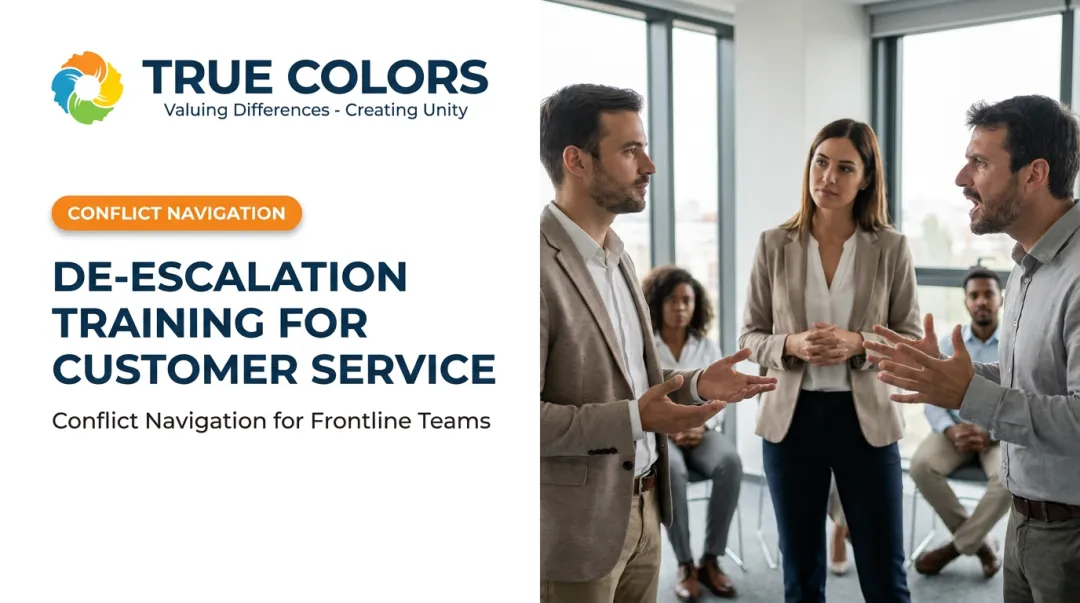
A billing error nobody can explain. A delivery that's three days late. A policy that sounded reasonable in the handbook but makes no sense to the person on the phone. These moments happen every day in customer service, and how an agent handles the first ninety seconds often decides whether the interaction ends calmly or spirals.
Conflict resolution training prepares agents for that fork in the road. It builds communication skills, emotional regulation, de-escalation tactics, and problem-solving—along with boundary-setting and knowing when to escalate. The goal is a resolved customer and a steady agent, not a won argument or a memorized script.
Below you'll find the core strategies, how they play out in real customer scenarios, and a framework managers can use to build or evaluate a training program.
Key Takeaways
- Agents must regulate their own emotional response before they can de-escalate anyone else's
- Active listening, empathy, and joint problem-solving beat arguing or "customer is always right" policies
- Strong programs mix role-play, channel-specific practice, coaching, and clear escalation rules
- 85% of employees face workplace conflict, costing organizations $359 billion in paid hours each year
Why Conflict Resolution Training Matters in Customer Service
The Cost of Getting It Wrong
Customers don't give many second chances. According to Zendesk's 2023 CX Trends report, which surveyed nearly 3,700 customers and over 4,700 service leaders and agents across 20 countries, 73% of customers switch brands after multiple bad experiences, and more than half leave after just one unsatisfactory interaction.
That single unresolved conflict doesn't stay contained to one ticket. It shows up later as:
- A one-star review that shapes new customer expectations
- A repeat contact from the same unresolved issue
- An escalation that eats up a manager's afternoon
- A stressed agent who dreads their next shift
What Training Does for Agents
Well-trained agents don't just handle conflict better, they experience it differently. They walk into tense calls with a plan instead of dread, which shows up as steadier tone, faster problem identification, and more consistent outcomes across the team.
Consistency matters here. Two agents handling the same billing complaint should reach a similar resolution path, not wildly different ones based on mood or experience level.
Skills Alone Aren't Enough
Here's something training providers rarely say out loud: a great training session can't fix a broken system. If agents don't have real authority to issue a refund or waive a fee, no amount of empathy language will resolve the call. Organizations need:
- Clear, written policies agents can reference in real time
- Reasonable decision-making authority at the agent level
- Manager support that's actually reachable, not theoretical
- A documented procedure for abusive, threatening, or unsafe interactions
Research from SHRM found that 8 in 10 customer service representatives have experienced verbally abusive customers. Training should teach de-escalation, but it must be paired with a clear boundary policy and a manager escalation path. Skill without structure leaves agents exposed.

Essential Conflict Resolution Strategies for Customer Service
Start With Self-Regulation
Before an agent can calm a customer, they need to calm themselves. It sounds simple, yet training programs often skip it and jump straight to scripts.
Teach agents to:
- Pause and take one breath before responding to a hostile opener
- Notice their own physical reaction (tight chest, faster speech, defensiveness)
- Keep tone calm and even, regardless of the customer's volume
- Separate the customer's frustration from a personal attack
A customer yelling about a shipping delay is angry at the situation, not at the agent personally. Agents who internalize that distinction recover faster and burn out slower.
Listen Before You Solve
Most escalations get worse because the agent tried to solve the problem before understanding it. Active and reflective listening slows that down:
- Let the customer finish explaining without jumping in with a solution
- Take notes on specific details (order numbers, dates, prior promises made)
- Paraphrase the concern back: "So the package was supposed to arrive Tuesday, and it's now Thursday with no update."
- Confirm the desired outcome by asking directly: "What would make this right for you?"
That last question often reframes the whole call. Customers sometimes want a refund. Sometimes they just want someone to acknowledge the company dropped the ball.
Show Empathy Without Auto-Agreeing
Empathy and agreement aren't the same thing. An agent can validate a customer's frustration without conceding they're right about the facts.
- Validate the experience: "I can see why this is frustrating."
- Apologize when the company genuinely caused the problem, not as a reflex
- Avoid defensive phrases like "that's not our policy" as an opening line
- Ask clarifying questions when the customer's account doesn't match the system
Clarify, Then Build a Real Solution
Once the emotional temperature drops, separate fact from assumption. Ask what happened, what the customer expected, and what resolution would actually satisfy them. Then move to a transparent solution:
- State clearly what can and cannot be done
- Offer realistic alternatives instead of vague reassurance
- Document any commitment made during the call
- Give a specific follow-up timeline, not "soon"
Set Boundaries and Escalate When Needed
Even strong listening and clear solutions won't resolve every interaction. When a customer becomes threatening, harassing, discriminatory, or asks for something outside the agent's authority, the agent needs permission to redirect the interaction:
- "I want to help resolve this, but I need us to keep the conversation respectful."
- "This is outside what I'm able to approve, so let me connect you with someone who can."
- "I'm going to transfer you to my supervisor so we can get this handled properly."
Agents need explicit training on when these lines apply—and confidence that using them won't get them in trouble. Structured conflict navigation programs, including personality-based approaches like those from True Colors International, help teams practice these judgment calls before a live escalation puts them to the test.

How to Apply Strategies to Common Customer Conflicts
Different conflict types call for different sequencing. Use this map to match the core strategies to the scenarios agents hit most often:
| Conflict Type | Key Move | What to Avoid |
|---|---|---|
| Miscommunication/policy confusion | Restate policy in plain language, check understanding | Blaming the customer for "not reading" |
| Delayed delivery/service | Share verified status, explain next action | Promising a timeline the team can't guarantee |
| Billing dispute | Review account, confirm error vs. misunderstanding | Assuming fault before checking records |
| Product/service failure | Troubleshoot, offer repair/replacement, document | Dismissing the issue as user error |
Billing and Complaint Conflicts Take Longer
According to SQM Group's 2024 benchmark, first-contact resolution averaged 69% overall, but complaints resolved at only 48% compared to 71% for orders and 69% for billing. Complaint calls carry more emotion and complexity than routine billing questions. Give agents more time, more patience, and a wider resolution path when the issue is a complaint—not just an account correction.
A Quick Contrast: Escalatory vs. Resolution-Focused
When policy limits what you can do, language still decides whether the call cools down or heats up.
Escalatory response: "That's not something we can do. It's just our policy."
Resolution-focused response: "I understand that's frustrating. Here's what I can offer, and here's why the other option isn't available right now."
The second version names the limit without blaming the customer—and keeps the next step visible.
Channel Changes the Approach
- Phone: Tone carries the message—stay composed and narrate actions ("I'm pulling up your account now")
- Live chat: Words are permanent—stay concise, avoid ambiguity, and use clear transfer language
- Email: Slower pace allows thorough review, but tone is easy to misread without vocal cues
- In-person: Privacy matters more—move sensitive conversations away from other customers when you can
If text is making things worse, switch channels. Moving a heated chat to a phone call often defuses tension faster than another written reply.
How to Build Effective Conflict Resolution Training
Start With Real Data, Not Guesswork
Before choosing a training format, review:
- Complaint themes and repeat-contact reasons
- Quality-monitoring notes flagged by supervisors
- Escalation logs (what triggers them, how often)
- Employee feedback on where they feel unprepared
- Differences in conflict patterns across channels
This assessment step matters because not every performance gap is a training problem. Sometimes agents already know what to do but lack the authority or tools to do it.
Teach a Repeatable Framework
Once you know where the gaps are, agents need more than isolated tips — they need a sequence they can follow every time. True Colors International builds its conflict navigation certification around this kind of structured, repeatable approach rather than one-off advice.
- Self-regulate
- Listen and reflect
- Show empathy
- Clarify the real issue
- Design a solution
- Set boundaries if needed
- Escalate appropriately
- Document the outcome
Practice With Real Scenarios
A framework only sticks when agents rehearse it under realistic pressure. Generic role-play falls flat — instead, use situations pulled from actual complaint logs: an angry caller demanding a refund outside policy, a public social media complaint, a delayed order with no tracking update, a customer making a safety threat.
Coach, Reinforce, and Measure
- Have managers observe live or recorded interactions and give specific, actionable feedback
- Run brief debriefs after difficult calls while details are fresh
- Refresh training periodically instead of treating it as a one-time event
- Keep escalation pathways visible and easy to use
For evaluation, track resolution quality, escalation patterns, repeat contacts, and agent confidence, but only measure what your data can actually support. Don't invent a benchmark to fit the story.
How True Colors International Can Support Customer Service Teams
Most conflict escalates because two people are speaking past each other, not because either one is wrong. True Colors International's personality-based communication methodology closes that gap.
The approach helps customer service teams:
- Build self-awareness about their own communication tendencies under stress
- Recognize that customers (and coworkers) process information and pressure differently
- Reduce miscommunication by adapting language to how someone actually receives it
- Develop a shared internal language for talking through tense interactions afterward, without labeling or stereotyping customers

True Colors uses a full spectrum model. Every person carries a mix of communication styles, so the training stays grounded in flexibility rather than fixed types.
True Colors International brings:
- Over 45 years in organizational communication and culture-building
- An ASI-certified assessment methodology, valid through 2027
- SHRM recertification provider status and HRCI approval
- Scalable programs across corporate, healthcare, government, education, hospitality, and technology sectors
Conflict Navigation, Emotional Intelligence, and Communication tracks layer directly into a customer service program. Agents get tactical skills plus the self-awareness that keeps those skills steady under pressure.
Organizations exploring a customized program can reach out at solutions@truecolorsintl.com to discuss what a tailored rollout could look like for their team.
Frequently Asked Questions
What are some effective conflict resolution strategies for customer service?
The core strategies include self-regulation, active listening, empathy without automatic agreement, clarifying the real issue, building transparent solutions, and setting respectful boundaries. Escalate immediately if a situation involves threats or safety concerns.
Where can I find training on conflict resolution in customer service?
Options include internal learning and development teams, specialist customer service or de-escalation training providers, and customized communication programs like those offered by True Colors International. The right fit depends on whether you need a standalone workshop or a broader culture-building initiative.
What are the 5 C's of conflict?
There isn't one universal version. One widely cited framework defines them as Clear communication, Calmness, Clarification, Collaboration, and Compromise. Other published versions use different words entirely, so treat "the 5 C's" as a helpful mnemonic rather than a fixed standard.