Introduction
Most small business owners picture team building as a corporate perk: trust falls, fancy retreats, six-figure "culture" budgets. But tight-knit teams of 5 to 50 people need intentional bonding more than large enterprises do, not less.
Here's why the stakes are higher. When one person on a 12-person team checks out, you feel it immediately in missed deadlines, tense meetings, and quieter Slack channels. There's no HR department to absorb the impact.
Team building isn't just morale management. Done right, it improves communication, cuts turnover, and helps you spot the next person ready for more responsibility before you make a costly outside hire.
This guide covers 10 practical, budget-conscious activities built for small teams, plus how to pick the right one and turn it into a habit instead of a one-off event.
Key Takeaways
- Small teams feel the ROI of team building faster because every employee's engagement directly affects output
- The best activities pair low cost and minimal time with one clear goal: trust, communication, creativity, or problem-solving
- Personality-based frameworks like True Colors give teams a shared language that makes every other activity work better
- A light monthly touchpoint plus a deeper quarterly session beats a single annual off-site
Why Team Building Matters for Small Businesses
Team building is any structured activity designed to strengthen how coworkers communicate, trust each other, and solve problems together. For small businesses, it does double duty: it's a morale boost, but it's also a productivity investment, because you don't have the headcount cushion to absorb a disengaged employee's underperformance.
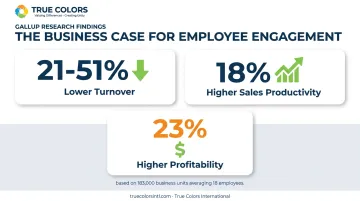
The data backs this up. Gallup's most recent Q12 meta-analysis studied over 183,000 business units, averaging just 18 employees each, close to the size of most small business teams.
Work units in the top engagement quartile saw turnover rates 21% to 51% lower than bottom-quartile units, depending on the organization's baseline turnover rate. That same research linked high engagement to 23% higher profitability and 18% higher sales productivity at the team level.
Small teams also work in closer daily proximity than large enterprises. That's a double-edged sword:
- The upside: A well-timed icebreaker or workshop can shift team dynamics almost overnight
- The downside: One unresolved personality clash has nowhere to hide
That's why the mix of quick icebreakers and guided, personality-based workshops covered below tends to deliver faster results for small teams than for large companies with dedicated HR departments.
10 Best Team Building Activities for Small Businesses
Every activity on this list was chosen for the same three reasons: it's cost-effective, it respects your team's time, and it builds one of the four things small teams need most: trust, communication, creativity, or problem-solving.
1. True Colors Personality-Based Team Building Workshop
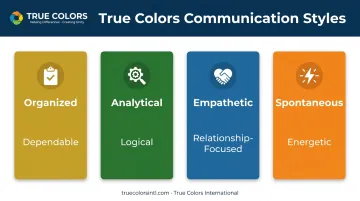
Employees complete a validated personality assessment that identifies their communication "color," then work through a facilitated session that translates those insights into daily teamwork. Instead of guessing why a coworker communicates the way they do, everyone gets a shared vocabulary for it.
For a team of eight, one unresolved personality clash isn't a minor annoyance. It can derail a whole project.
True Colors' methodology has been refined over 45+ years, is ASI-certified through 2027, and is built on a validation sample of 10,000 people. Wisconsin-based Fortifi Bank, a 130-employee institution, credited the workshop with transforming how its team communicates and resolves disagreements.
| Factor | Details |
|---|---|
| Best For | Communication, self-awareness, and conflict resolution |
| Team Size | Scales from 5 to 50+ employees |
| Time Commitment | Half-day or full-day, in-person or virtual through certified facilitators |
2. Two Truths and a Lie
Each person shares three statements about themselves, two true and one false, and the group guesses the lie. It's a simple format, but it reliably surfaces surprising common ground between coworkers who barely interact day to day.
For small businesses, the appeal is obvious: it costs nothing, works for a brand-new hire on day one, and requires zero planning.
| Factor | Details |
|---|---|
| Best For | Breaking the ice and quick rapport-building |
| Team Size | Any size, most effective under 15 people |
| Time Commitment | 15-30 minutes |
3. Escape Room Challenge
A timed puzzle room forces rapid delegation and communication under pressure. Nothing exposes your natural leaders and clear communicators faster than a ticking clock, which makes this a useful, low-stakes way to spot who's ready for more responsibility.
One 10-person team, SchoolCare, converted this into a virtual session during remote work for $250 to $275. They came away with a clearer sense of who solves problems and who naturally organizes the group.
| Factor | Details |
|---|---|
| Best For | Problem-solving and pressure-tested communication |
| Team Size | 4-8 people per room (scalable with multiple rooms) |
| Time Commitment | 60-90 minutes |
4. Community Volunteering Day
Organize a half-day outing around a cause your team actually cares about — a food bank shift, a park cleanup, a fundraiser. Shared purpose builds deeper bonds than any office game ever will, and it doubles as visible goodwill in your local community.
| Factor | Details |
|---|---|
| Best For | Empathy, camaraderie, and shared purpose |
| Team Size | Any size |
| Time Commitment | Half-day to full-day |
5. Skill-Swap Lunch & Learn
Employees take turns teaching a short session on something they're genuinely good at, whether that's Excel shortcuts, photography, or public speaking, paired with a group lunch. No outside facilitator needed, and it surfaces expertise that's already sitting inside your team, unused.
| Factor | Details |
|---|---|
| Best For | Knowledge-sharing and internal confidence-building |
| Team Size | 5-20 people |
| Time Commitment | 30-45 minutes, recurring monthly |
6. Office Olympics
Run low-stakes, quasi-athletic mini-competitions: paper airplane distance, rolling-chair races, cup-stacking relays. It's a small-business favorite because it costs almost nothing (you're using supplies already in the office) and adapts easily to hybrid teams over video.
| Factor | Details |
|---|---|
| Best For | Morale and friendly competition |
| Team Size | Any size |
| Time Commitment | 1-2 hours |
7. Scavenger Hunt (In-Office or Virtual)
A clue-based hunt combines movement, problem-solving, and light competition. Remote employees can participate through photo or video submissions, making it one of the few activities that works equally well in-person, hybrid, or fully remote.
| Factor | Details |
|---|---|
| Best For | Collaboration and creative problem-solving |
| Team Size | Groups of 4-6 |
| Time Commitment | 1-2 hours |
8. Hands-On Creative Workshop
A guided session — mosaic art, a cooking class, a craft workshop where the team builds something tangible together. Keeping hands busy naturally loosens conversation in a way that sitting-and-talking icebreakers can't match, and employees walk away with something they made together.
| Factor | Details |
|---|---|
| Best For | Stress relief and creative bonding |
| Team Size | 6-20 people |
| Time Commitment | 1.5-2.5 hours |
9. Group Wellness Challenge
Run a team-wide, opt-in challenge around movement, hydration, or mindfulness over a set stretch of weeks. It signals that employee well-being matters without requiring a big program budget, and it's inclusive of every fitness level on the team.
| Factor | Details |
|---|---|
| Best For | Well-being and shared accountability |
| Team Size | Any size |
| Time Commitment | Ongoing over 2-4 weeks |
10. Mini Hackathon / Business Problem Brainstorm
Split the team into small groups to tackle a real, current business problem within a set time limit, then present solutions. Unlike generic games, this produces usable ideas while still building teamwork, which makes the time investment an easier sell to ownership.
| Factor | Details |
|---|---|
| Best For | Innovation and applied problem-solving |
| Team Size | Any size, split into groups of 3-5 |
| Time Commitment | 2-3 hours |
How to Choose the Right Team Building Activity
Don't pick an activity because it's trending. Match it to a specific gap on your team first.
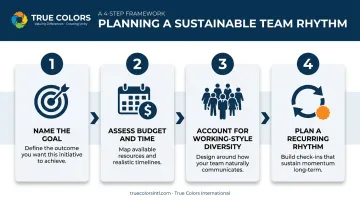
- Name the goal. Is your team struggling with trust, communication, creativity, or problem-solving? Pick the activity built for that gap, not the one your competitor posted on LinkedIn.
- Be honest about budget and time away from work. Smaller teams have fewer training dollars and less staff coverage, and costs like venue rental, instructor fees, and materials add up fast.
- Account for working-style diversity. A team of extroverted, fast-talking salespeople needs a different approach than a team of quiet, detail-oriented analysts. Starting with a baseline personality assessment, like True Colors, tells you how your specific team communicates before you guess which activity will land.
- Plan a recurring rhythm. Pair a light monthly activity, such as a skill-swap lunch, with a deeper quarterly session. That cadence builds momentum a single annual retreat never will.
Conclusion
Team building is a lean, high-ROI lever for retention, culture, and performance in small businesses. Every employee's contribution counts more when your headcount is small, so the payoff compounds fast.
Before picking from the list above, diagnose your team's specific gap: trust, communication, or creativity. Then treat whatever you choose as an ongoing practice, not a one-time event you check off and forget.
Not sure where to start? Build a personality-based foundation first. True Colors International workshops and facilitator certifications give your team a shared language for how they communicate, so every other activity on this list works better from day one.
Frequently Asked Questions
What are some unique team building ideas?
Beyond generic icebreakers, consider a personality-based workshop like True Colors, a mini hackathon tackling a real business problem, or a hands-on creative session like a group cooking class. Each one builds skills your team can reuse at work the next day.
What are the best team building activities for a small team (under 10 people)?
Two Truths and a Lie, skill-swap lunches, and personality workshops all work well because they give every single person a voice. With a group this size, there's nowhere for anyone to hide, which is exactly the point.
How often should small businesses do team building activities?
Aim for a light monthly touchpoint, like a lunch and learn, paired with a deeper quarterly activity such as an escape room or workshop. Adjust the frequency based on team size and current workload.
What is the cheapest way to do team building for a small business?
Two Truths and a Lie costs nothing. Office Olympics uses supplies already sitting in your office. Peer-led skill-swaps use expertise you already have—no outside facilitator needed.
Can team building activities be done virtually for remote small business teams?
Yes. Scavenger hunts, wellness challenges, and personality workshops all adapt well to remote settings. Gallup research finds hybrid teams with a clear collaboration plan are 2.2 times more likely to report positive collaboration—so design the virtual format on purpose.
How do personality assessments like True Colors improve team building outcomes?
A shared understanding of communication styles means fewer misread comments and less unnecessary conflict. Once people know how each teammate prefers to communicate, icebreakers, workshops, and hackathons run with less friction and clearer follow-through.