That gap shows up fast. A manager who could outsell, outcode, or outperform anyone on the team suddenly has to motivate, delegate, and resolve conflict, skills nobody put on the job posting. And the stakes are high: 57% of employees have left a job because of their manager, according to DDI's Frontline Leader Project, which surveyed over 1,000 managers, senior leaders, and individual contributors.
The good news? Leadership skills aren't fixed traits. They're learnable. This article breaks down the 7 essential team leadership skills every manager needs, plus practical ways to build them.
Key Takeaways
- Team leadership blends interpersonal skills with functional skills like delegation
- Emotional intelligence and adaptive communication form the foundation everything else builds on
- Managers develop these skills through training, coaching, and personality assessments
- Recognizing personality differences on your team speeds up trust and cuts down on conflict
Why Team Leadership Skills Matter More Than Ever
Management and leadership aren't the same thing, and confusing them is where a lot of new managers stumble.
Management is about process: hitting deadlines, tracking budgets, executing the plan. Leadership is about people: setting direction, building trust, and helping a team adjust when things change.
Harvard Business School frames it plainly: management ensures effective execution of chosen goals, while leadership determines what those goals should be and drives the change needed to reach them.
Modern managers can't pick one lane. They need both.
The payoff for getting leadership right is substantial. Gallup's meta-analysis of over 183,000 business units found that teams with highly engaged, well-led employees see:
- 23% higher profitability
- 18% higher sales productivity
- 32% fewer quality defects
- 78% less absenteeism
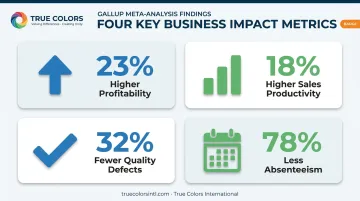
That's according to Gallup's Q12 Meta-Analysis, which pulled data from 3.3 million employees across 90 countries.
Hybrid work has raised the difficulty level further. Most managers today are leading teams they rarely see in person, spanning multiple generations with different communication habits and expectations. There's no single playbook that works for everyone anymore. The seven skills below focus on the adaptive, people-centered abilities that matter most, whatever your team looks like.
The 7 Essential Team Leadership Skills Every Manager Needs
These skills apply whether you're managing three people or three hundred, and whether you're a first-time supervisor or a seasoned director. Here's what separates managers who retain talent from those who burn through it.
1. Clear and Adaptive Communication
Communication consistently tops the list of skills employees wish their managers had. The real issue is that leaders default to one communication style and expect everyone to adapt to it, instead of the other way around.
People process information differently. Some team members want data and logic upfront. Others need context and relationship-building before they engage with a decision. A manager who only communicates one way will consistently miss half their team.
At True Colors International, this is a core piece of what personality-based training addresses. One client, The Bama Companies, put it simply after adopting the True Colors framework:
"I now make a point to understand my team members' primary colors so I can engage and share information in ways that really resonate with them."
That's adaptive communication in practice: adjusting the message, not just repeating it louder.
2. Emotional Intelligence and Empathy
Emotional intelligence (EQ) breaks down into four components:
- Self-awareness — recognizing your own emotional triggers and reactions
- Self-regulation — managing those reactions instead of acting on impulse
- Empathy — understanding what a team member is experiencing
- Social skill — using that understanding to build genuine connection
Leaders with strong EQ create psychological safety, meaning people feel safe raising concerns, admitting mistakes, and disagreeing without fear of punishment. That safety directly reduces turnover and defuses conflict before it escalates.
Self-awareness is the hardest piece to build alone. Most people can't see their own blind spots, which is why personality assessments have become a common starting point. They give managers an objective mirror instead of relying on trial and error.
3. Delegation
Bad delegation looks like handing off tasks based on who's available, not who's suited for the work. Good delegation matches tasks to individual strengths, and it requires letting go of control, which is uncomfortable for a lot of new managers.
A simple framework helps:
- Set clear expectations — define the outcome, not just the task
- Provide resources — make sure the person has what they need to succeed
- Establish check-in points — agree on when you'll touch base, not constant oversight
- Trust follow-through — resist the urge to micromanage between check-ins
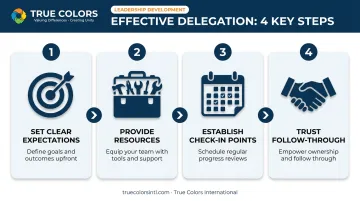
Managers who skip the last step, trust, end up doing the work themselves anyway. That stalls both their own growth and their team's.
4. Decision-Making and Problem-Solving
Under pressure, a structured approach beats gut instinct almost every time:
- Define the problem clearly before jumping to solutions
- Explore options, even quickly, rather than fixating on the first idea
- Decide and commit
- Revisit if new information changes the picture
The harder call is knowing when to decide alone versus when to bring the team in. Fast, low-stakes decisions usually don't need a committee. High-stakes decisions, or ones that affect how the team works day to day, benefit from input. It slows things down slightly but builds buy-in and surfaces perspectives you'd otherwise miss.
5. Conflict Resolution and Management
Conflict eats up more manager time than most people expect. Many managers spend several hours each week addressing disagreements, disciplinary issues, or team friction rather than strategic work.
Two techniques consistently help: active listening, repeating back what you heard before responding, and finding common ground, identifying the shared goal underneath the disagreement before proposing a fix.
Understanding conflict styles, not just conflict content, speeds up de-escalation. Some people withdraw under pressure; others get more direct or more emotional. Personality-based conflict training, like the kind covered in True Colors' Conflict Navigation certification track, gives leaders a shared language for recognizing these patterns before they escalate.
6. Adaptability and Situational Leadership
One leadership style doesn't fit every person on your team. A brand-new hire typically needs more structure, more check-ins, and more explicit direction. A seasoned high performer usually wants autonomy and gets frustrated by hand-holding.
Situational leadership means flexing based on two factors: experience level and personality. New hires need more guidance and check-ins, while veteran performers need more trust and autonomy. Detail-oriented people want explicit instructions; big-picture people want room to figure out the rest on their own.
Applying the same approach to both people creates a mismatch that frustrates everyone involved.
7. Motivation and Recognition
Recognition directly affects retention. Gallup's longitudinal research found that employees who felt well-recognized in 2022 were 45% less likely to have left their organization by 2024.
Generic praise doesn't move the needle the way personalized recognition does. What motivates one person, public acknowledgment, might embarrass another who'd rather receive a quiet note or a new challenge instead. True Colors' methodology applies this directly: each of the four personality types responds to distinct motivators, and leaders who learn to spot those differences get more mileage out of every "thank you."
How to Develop These Leadership Skills as a Manager
Nobody becomes a strong leader by reading one article, including this one. Skill-building works best through structured, repeatable methods:
- Leadership workshops that provide frameworks, not just theory
- Mentorship from someone who's navigated similar team challenges
- Ongoing feedback loops with peers and direct reports, not just annual reviews
Personality and communication-style assessments, the kind True Colors International builds its workshops around, accelerate this process by identifying blind spots faster than years of trial and error would. Instead of guessing why a delegation attempt fell flat, a manager can see, concretely, that their communication style clashed with a team member's preferences.
With that clarity, the most effective approach is to pick one skill, apply it in a real situation this week, and ask for specific feedback afterward. Trying to overhaul all seven skills simultaneously usually backfires.
Building These Skills at Scale with True Colors International
Individual development is a start. Building these skills across an entire team, consistently, is harder, and it's where most manager training falls short.
True Colors International has spent over 45 years helping organizations, including Amazon, Google, and Ford, translate personality differences into practical leadership skills. Its ASI-certified personality assessment gives managers and teams a shared language for the exact skills covered above: communication, empathy, conflict navigation, and adaptability.
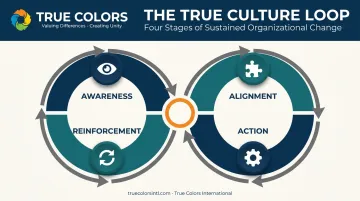
The company's approach centers on what it calls the True Culture Loop, a continuous framework moving teams through awareness, alignment, action, and reinforcement. This ongoing cycle keeps leadership skills from fading after a single workshop.
For managers who want to go deeper, True Colors offers Advanced Certification tracks in:
- Communication
- Conflict Navigation
- Team Building
These programs align with SHRM and HRCI standards, which matters for HR and L&D teams evaluating whether a program will count toward professional recertification requirements.
Frequently Asked Questions
What are the skills of a team leader?
The core skills include clear communication, emotional intelligence, delegation, decision-making, conflict resolution, adaptability, and motivation. Together, they help a leader guide both individual performance and overall team cohesion.
What is the difference between a team leader and a manager?
A manager focuses on process and execution, keeping projects on track and resources allocated well. A team leader focuses on vision and people, setting direction and building the trust that makes execution possible.
How can managers improve their team leadership skills?
Structured workshops, mentorship, and personality-based assessments accelerate growth faster than trial and error. Applying one skill at a time and tracking feedback from direct reports keeps improvement measurable.
Why is emotional intelligence important for team leaders?
EQ helps leaders build psychological safety, meaning team members feel comfortable speaking up and taking risks. That safety directly reduces turnover and workplace conflict.
How does personality type affect leadership style?
Personality differences shape how people prefer to receive information, get motivated, and handle conflict. Leaders who understand these differences adapt their approach instead of using one style for everyone.
What certifications can help build team leadership skills?
Programs aligned with SHRM and HRCI standards, such as True Colors' Communication, Conflict Navigation, and Team Building certifications, give managers structured, credentialed paths to strengthen specific leadership skills.