That gap is showing up everywhere. Only 30% of nearly 1,900 managers who took part in a 2024 talent review believed their leadership bench was strong, according to Gartner. SHRM has responded by making Leadership & Navigation a core behavioral competency for HR professionals at every certification level.
This guide breaks down what leadership navigation actually means, the skills it demands, and why understanding personality differences on your team accelerates all of it.
Key Takeaways
- Leadership navigation means driving initiatives while respecting culture, hierarchy, and unwritten rules
- It applies at every level, from new hires to executives leading company-wide change
- Core skills: collaboration, vision-setting, execution discipline, and controlled adaptability
- Self-awareness and personality insight are the foundation for navigating people, not processes
- Structured training and shared communication frameworks build this capability organization-wide
What Is Leadership Navigation in Organizations?
SHRM's Body of Applied Skills and Knowledge defines Leadership & Navigation as the ability to "create a compelling vision and mission... accomplish organizational goals, lead and promote organizational change, navigate the organization, and manage the implementation and execution of initiatives."
In plain terms: it's understanding the most effective way to get things done inside your specific organization's hierarchy, systems, and unspoken politics. A brilliant strategy means nothing if it dies in committee or gets ignored by a department that was never consulted.
Leadership Navigation vs. General Leadership
Leadership is about vision and influence. Navigation is the skill of operating inside organizational structure to make that vision real. You can have a visionary leader who can't get a single initiative past middle management. That's a navigation failure, not a vision failure.
SHRM identifies several behaviors that define strong navigation:
- Fostering collaboration across stakeholders who don't naturally talk to each other
- Overcoming obstacles that block implementation, from budget freezes to turf wars
- Demonstrating agility when plans need to shift mid-stream
- Setting the tone for organizational culture through everyday decisions
This isn't reserved for the C-suite. Entry-level employees model culture through how they handle daily friction. Mid-level managers implement initiatives handed down from above. Executives drive change across the whole organization. Everyone navigates, just at different scales.
Consider this: research on leadership readiness suggests only about 30% of organizations have a strong bench of leaders prepared to step up when needed. That gap points to a navigation problem, not a talent problem — most organizations have plenty of people with titles and not enough people who can actually get work done.
Why Leadership Navigation Matters for Organizational Success
Weak navigation shows up as predictable damage: miscommunication between departments, decisions made in silos, and employees who quietly disengage because nobody translated the "why" behind a change.
Gallup's research puts a number on this. Managers account for at least 70% of the variance in employee engagement scores across business units. That statistic represents a measurable business variable, tied directly to how well people in leadership roles navigate their teams day to day.
This isn't a corporate-only concern. The same dynamic plays out:
- Healthcare: clinical teams need clear communication to protect patient safety
- Education: administrators navigate staff, parents, and policy simultaneously
- Government and non-profits: mission-driven work still runs on people successfully working within structure
- Military: mission-critical operations depend on disciplined communication across ranks and units
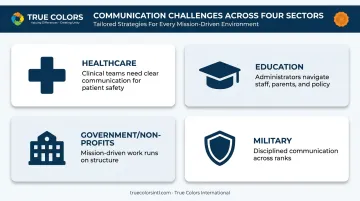
Every one of these settings depends on someone bridging strategy and execution. Get that wrong, and the best plan in the world stalls.
Core Skills and Competencies Leaders Need to Navigate Effectively
Navigation relies on several skills working together, not just one.
- Collaboration that avoids blind spots. Leaders who gather input from multiple stakeholders before deciding catch problems a single perspective would miss. Skipping this step is how good leaders make avoidable mistakes.
- Establishing values and foundational principles. Every decision either reinforces or undermines the culture. Leaders set the ethical tone whether they mean to or not.
- Articulating a clear, compelling vision. A vision that only lives in a slide deck doesn't align anyone. It has to be repeated, translated into daily language, and connected to what each team actually does.
- Translating plans into action. Vision without execution is just a wish.
- Balancing adaptation with stability. Constant, abrupt change wears people down. Incremental, values-aligned change tends to hold trust better because people can see where things are headed.
- Communication and emotional intelligence. Different people process direction, conflict, and change differently. Reading that difference, and adjusting your approach, is where navigation gets personal.
McKinsey's survey of 416 senior executives found that "Strategy Champions" consistently convert priorities into goals, KPIs, resource allocation, and individual accountability.
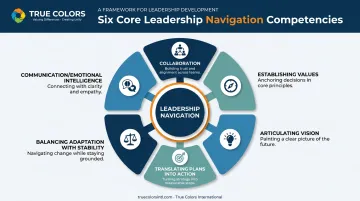
That last point on communication and emotional intelligence deserves its own conversation, because it's where most leadership training falls short.
The Role of Personality and Temperament in Leadership Navigation
Leaders don't just navigate processes. They navigate people, and people respond to pressure, conflict, and change in genuinely different ways.
Self-Awareness Comes First
Before a leader can adjust to someone else's style, they need clarity on their own. Most people rate their own self-awareness far higher than their teams do, and that gap widens under pressure, exactly when flexing communication matters most.
Leaders who close that gap stop expecting everyone to meet them halfway. A manager who knows she defaults to fast, direct feedback can slow down and add context for a team member who needs more detail before responding. That kind of adjustment starts with knowing your own default style, not the other person's. Peer feedback, gathered regularly, closes the gap faster than self-reflection alone.
A Shared Language for Temperament Differences
This is where personality-based frameworks earn their place in leadership development. They give teams a common vocabulary for something that used to stay unspoken: why one colleague wants the big picture first and another wants a checklist.
True Colors International has built its 45-plus years of work around exactly this. The company's proprietary, ASI-certified personality assessment has been used by organizations including Google, Amazon, and Ford. It helps teams and leaders build a shared understanding of how their people communicate, make decisions, and handle stress.
That shared understanding runs on what True Colors calls the True Culture Loop, a continuous cycle rather than a one-time workshop:
- Awareness — individuals identify their own personality strengths and stress responses
- Alignment — teams connect those patterns to real, everyday interactions
- Action — leaders apply the shared language in meetings, coaching, and conflict resolution
- Reinforcement — the framework gets revisited and built on, rather than filed away after training day
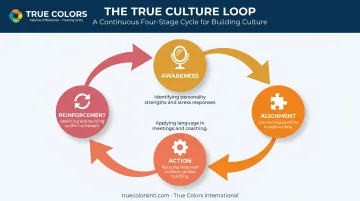
Culture built once and left alone tends to fade. A loop keeps it alive.
Overcoming Common Challenges in Leadership Navigation
Even skilled leaders hit the same handful of obstacles. Here's how to work through them.
Resistance to change and unclear vision. People push back when they don't understand the "why." The fix is repetition: tie every decision, however small, back to the organization's stated vision and values. Say it more often than feels necessary.
Siloed communication between departments or generations. Different teams, and different personality styles, default to different communication habits.
A shared framework or assessment tool gives everyone the same vocabulary. That common language cuts down on the misreadings that cause most workplace friction.
Building navigation capability across the whole organization. One seminar doesn't create lasting change.
True Colors addresses this through a global network of certified Master Trainers and facilitators, plus advanced certification tracks in areas like Communication, Conflict Navigation, and Team Building. This gives organizations ongoing coaching rather than a single training day that fades within weeks.
The goal isn't a one-time fix. It's building the muscle so navigation becomes routine, not a special initiative.
Frequently Asked Questions
What is organizational navigation?
Organizational navigation is the ability to understand and work effectively within an organization's hierarchy, processes, and culture to accomplish goals and implement initiatives. Formal authority matters less than knowing how to move initiatives forward within existing structure.
What is the difference between leadership and leadership navigation?
Leadership is about vision and influence, the "what" and the "why." Navigation is the specific skill of operating within organizational structure to turn that vision into something implemented and real.
What skills are most important for leadership navigation?
Collaboration, clear vision communication, disciplined execution through KPIs and accountability, and emotional intelligence top the list. Each one addresses a different part of getting initiatives through a real organization.
Why is leadership navigation considered important in HR and SHRM competencies?
SHRM includes it as a core behavioral competency because it directly affects whether an organization can execute initiatives at every level, not just at the top. Vision alone doesn't move projects forward.
How can personality assessments improve leadership navigation?
Personality assessments give leaders concrete insight into how colleagues communicate, make decisions, and respond to stress. That insight reduces friction and speeds up collaboration, since fewer interactions get misread as conflict.
Can leadership navigation skills be developed, or are they innate?
These skills are learnable. Self-awareness training, structured coaching, and consistent practice inside real organizational situations build this skill over time, no natural charisma required.