The stakes are real. Companies that build dynamic, coached sales training see meaningfully stronger results than those relying on static sessions: teams with structured coaching reinforcement report 21.3% higher quota attainment and 19.0% higher win rates than the study average, according to CSO Insights' 5th Annual Sales Enablement Study.
This guide breaks down the top sales training programs for employees in 2026, how to evaluate them, and what separates genuine skill-building from checkbox training.
TL;DR
- Top 2026 programs blend sales methodology, AI practice tools, and ongoing coaching—not one-off workshops
- Choose providers by focus area, audience fit, format, and track record—not brand name alone
- Options span tactical skills (e.g., objection handling) to culture-based programs that strengthen team cohesion
- Apply a clear selection framework before you shortlist vendors or compare curricula
Overview of Sales Training Programs for Employees in 2026
A sales training program is a structured curriculum that builds skills, knowledge, and behaviors so sellers can win deals predictably. The good ones don't stop at the workshop door. They reinforce learning through coaching, practice, and follow-up.
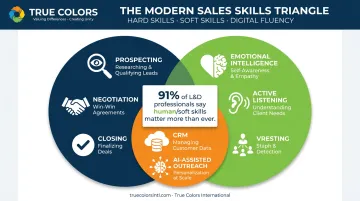
What's changed heading into 2026 is the balance of skills being taught. Buyers now expect consultative, human-centered conversations, not scripted pitches. That's pushing programs to blend:
- Hard sales skills: prospecting, negotiation, closing
- Soft skills: emotional intelligence, active listening, adaptability
- Digital fluency: CRM discipline, AI-assisted outreach, virtual selling
This shift shows up in the data. 91% of learning and development professionals now say human and soft skills matter more than ever, according to Adobe and LinkedIn's Workplace Learning Report. Sales training is following that same trajectory.
The list below covers a mix of methodology-driven, technology-enabled, and communication-first programs, each suited to different team needs.
Top Sales Training Programs for Employees in 2026
Selection here weighs methodology strength, certifications, client base, delivery flexibility, and evidence of measurable behavior change, not marketing claims.
Sandler Training
Sandler's Selling System is a seven-step, low-pressure method built on mutual respect and disciplined qualification rather than manipulation. It walks reps through rapport, an up-front contract, pain discovery, budget, decision-making, and post-sale confirmation.
Reinforcement is the real strength. Sandler's Sales Development Series pairs instructor-led sessions with self-paced learning, ongoing coaching, and a personalized LMS path, so skills get practiced long after the initial training ends.
| Aspect | Details |
|---|---|
| Focus | Behavior change, qualifying, closing discipline |
| Format | Workshops plus ongoing reinforcement sessions |
| Best For | Teams wanting long-term, habit-based skill development |
Richardson Sales Performance
Richardson's Connected Selling Curriculum is grounded in behavioral science and blends consultative, challenger, and agile selling methods into a single scalable system. Foundational programs build toward advanced ones as reps progress.
Technology integration carries the model further. Richardson delivers live and virtual workshops alongside its Accelerate platform, which uses assessments, gamification, and bite-sized modules to reinforce skills at scale.
| Aspect | Details |
|---|---|
| Focus | Buyer-centered dialogue, negotiation, virtual selling |
| Format | Live workshops, virtual training, blended digital journeys |
| Best For | Enterprise sales teams needing role-based, scalable training |
RAIN Group
RAIN Selling focuses on consultative conversations: discovery questions, needs confirmation, value positioning, and gaining commitment across the full sales cycle for B2B sellers.
RAIN backs this with a 90-day coaching process built on goals, action plans, and regular accountability check-ins. Managers can either coach directly or be trained to run the process themselves.
| Aspect | Details |
|---|---|
| Focus | Consultative selling, storytelling, negotiation |
| Format | Workshops, eLearning, coaching |
| Best For | B2B teams wanting reinforced, coached skill adoption |
Dale Carnegie
Dale Carnegie's Winning with Relationship Selling blends sales training with the company's broader leadership and personal-development roots. The process moves through Connect, Collaborate, Create, Confirm, and Commit.
Every module weaves in active listening, rapport-building, and understanding the client's unspoken needs, making this a fit for teams that want trust before tactics.
| Aspect | Details |
|---|---|
| Focus | Relationship selling, communication skills |
| Format | In-person, virtual, blended, modular |
| Best For | Teams prioritizing trust-building over aggressive tactics |
The Challenger Sale
Built from Matthew Dixon and Brent Adamson's research, Challenger trains reps to Teach, Tailor, and Take Control of complex B2B conversations instead of simply reacting to stated buyer needs.
Mindset is the lever. Reps learn to lead with insight and reshape how a buyer thinks about their problem—most useful in high-stakes, competitive deals.
| Aspect | Details |
|---|---|
| Focus | Insight selling, challenger mindset |
| Format | Workshop plus reinforcement modules |
| Best For | B2B sellers navigating complex, competitive deals |
True Colors International
True Colors has spent more than 45 years building personality-based communication and culture systems, now extended into an Advanced Certification in Consultative Selling grounded in temperament theory rather than generic scripts.
Reps learn to identify a customer's True Colors personality type, then adapt the conversation:
- Blue: Build rapport before diving into content
- Gold: Keep exchanges direct, with clear next steps
Prefacing and deep-dive questioning reframe objection handling as a communication-style issue, not only a tactics problem.
The methodology carries SHRM, HRCI, and ICF recognition and an ASI-certified assessment validated on 10,000 respondents. Organizations such as Amazon, Ford, Oracle, and Marriott have used the system.
| Aspect | Details |
|---|---|
| Focus | Personality-based consultative selling and EQ |
| Format | Facilitator-led workshops (in-person or virtual), assessments, team application |
| Best For | Teams tying sales skill to culture, retention, and communication |

How We Chose the Best Sales Training Programs
We ranked programs by cross-referencing provider certifications, methodology depth, delivery flexibility, and verified client outcomes—not self-reported marketing copy.
The most common mistake companies make? Picking a program based on brand recognition or price alone, without checking whether it matches their team's actual skill gaps, buyer type, or company culture. A challenger-style program won't help a team that's already strong on insight but weak on rapport.
We weighed four factors:
- Accreditations — SHRM, HRCI, ICF recognition as quality signals
- Reinforcement structure — coaching that continues after the workshop ends
- Format flexibility — in-person, virtual, or blended options
- Client retention — repeat engagements and documented outcomes over time
Programs that scored well on all four made this list. Programs that leaned on name recognition without reinforcement structure did not.
Key Benefits of Investing in Employee Sales Training Programs
Structured training pays off in three distinct ways.
It standardizes fundamentals. New hires and tenured reps end up speaking the same language around qualification, discovery, and closing. That shortens ramp time and reduces the inconsistent buyer experience that happens when every rep improvises their own approach.
It protects margin and ROI. Reps with real negotiation and objection-handling skills lean less on discounting to close deals. Stronger conversations protect margin instead of eroding it.
It strengthens collaboration and engagement. Programs that go beyond tactics into communication style and culture alignment reduce friction across teams—and often cut turnover as a result.
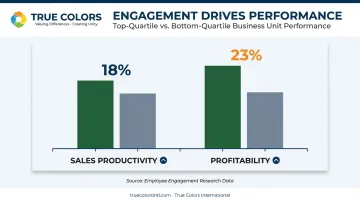
Top-quartile engaged business units post a median 18% advantage in sales productivity and 23% in profitability over bottom-quartile units, according to Gallup's Q12 meta-analysis of over 183,000 business units. Training that builds real communication skills feeds that engagement loop.
Conclusion
The best sales training program is the one that fits your team's skill gaps, buyer type, and company culture.
Before committing, evaluate scalability, reinforcement structure, and cost against expected ROI. Ask for a sample session. Watch how a provider handles a live objection-handling scenario before you sign a contract.
For teams that want sales training tied to something bigger than a quarterly quota, True Colors International's Consultative Selling Certification builds a communication-first, culture-aligned approach you can carry into every buyer conversation.
Frequently Asked Questions
What are the 5 P's of sales?
The 5 P's are Product, Price, Promotion, Place, and People. Together they frame how a sales strategy positions an offering, sets pricing, reaches buyers, and builds the relationships that close deals.
What's the difference between sales training and sales coaching?
Sales training is structured, curriculum-based skill-building delivered to a group. Sales coaching is ongoing, one-on-one reinforcement that helps individual reps apply what they learned to real deals.
How long should a sales training program typically run?
Most programs run from a single workshop to several weeks. Some, like RAIN Group's 90-day coaching process, extend reinforcement for months to lock in lasting behavior change.
Can personality assessments actually improve sales performance?
Yes. When reps understand a buyer's or teammate's communication style, they can adapt pitch and tone on the spot—building rapport faster and cutting friction in early conversations. Personality-based selling programs train exactly that skill.
What certifications should a sales training provider have?
Look for SHRM, HRCI, or ICF recognition, plus third-party validation of any assessment tools (for example, ASI certification). Those credentials signal quality control beyond a provider's own marketing claims.
How much should companies budget for employee sales training?
Costs vary by format and length; ATD reports a median of $1,000 to $1,499 per salesperson annually for sales-specific training. Weigh that against expected gains in close rates and retention.