The usual fix, another forced happy hour where everyone mutes their mic and stares at their coffee, doesn't help. It often makes the disconnect worse.
This guide skips the cheesy stuff. Below, you'll find why virtual team building matters, 10 activities organized by time and group size, tips for picking the right one, and how understanding personality styles turns a fun Tuesday afternoon into something that actually sticks.
Key Takeaways
- Virtual team building fights remote isolation and builds the trust that drives real engagement
- Match the format to the moment—from 5-minute icebreakers to hour-long bonding events
- Prioritize team size, time zones, and personality mix over novelty when choosing an activity
- Pair games with a framework like True Colors to turn one-off fun into lasting cohesion
Why Virtual Team Building Matters More Than Ever in 2026
Virtual team building covers any structured activity, from a two-minute icebreaker to a full workshop, that helps distributed coworkers connect as people, not just names on a Slack thread. And the need for it hasn't slowed down.
As of March 2026, 22.6% of U.S. workers teleworked or worked from home for pay, according to the Bureau of Labor Statistics. That's not a niche group—tens of millions of employees may go days without a genuine, unscripted conversation with a colleague.
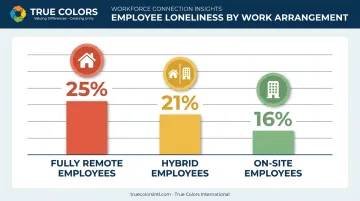
The isolation risk is real and measurable. Gallup found loneliness affects:
- 25% of fully remote employees
- 21% of hybrid employees
- 16% of exclusively on-site employees
That gap matters because loneliness isn't just a wellness issue. Gallup also found that engaged employees are 64% less likely to be lonely than their disengaged peers. Connection and engagement move together.
The goal is simpler than another packed calendar slot: choose activities that build genuine rapport without adding friction. The next ten are designed to do exactly that.
Top 10 Virtual Team Building Activities for Remote Teams in 2026
Every activity below meets three criteria:
- Low prep effort
- Comfortable for both introverts and extroverts
- Built to create real connection, not just fill time
Here's the quick-reference rundown:
| Activity | Time Required | Ideal Group Size |
|---|---|---|
| Quick Icebreaker Questions | 5-10 min | Any size |
| Online Trivia Challenges | 20-30 min | 6-20 |
| Virtual Escape Rooms | 45-60 min | 4-10 |
| Personality & Temperament Discovery Session | 60-90 min | 10-60 |
| Virtual Coffee Chats | 15-20 min | 2 (rotating pairs) |
| Collaborative Online Games | 30-45 min | 4-12 |
| Virtual Scavenger Hunt | 20-30 min | 6-20 |
| Remote Book or Media Club | 30-45 min, monthly | 5-15 |
| Virtual Talent Show | 30-60 min | 8-25 |
| Virtual Volunteer Event | 60-90 min | Any size |
Activity 1: Quick Icebreaker Questions
This or That, Two Truths and a Lie, or a simple "rose and thorn" prompt takes just 5-10 minutes at the top of a meeting.
- Format: One person answers a prompt, then passes it to the next
- Why it works: Low-pressure and quick, it reveals personality and humor without derailing the actual agenda
Activity 2: Online Trivia Challenges
Run company trivia or pop-culture rounds through Kahoot or a simple shared PowerPoint. Small prizes like a gift card or bragging rights add stakes.
- Format: Split into small teams, run 10-15 questions, tally scores live
- Why it works: Friendly competition sparks cross-team chatter that outlasts the game itself
Activity 3: Virtual Escape Rooms
Teams work together to solve timed puzzles through a shared platform, best for groups of 4-10.
- Format: Book a virtual escape room provider, split larger teams into smaller pods
- Why it works: Forces real-time communication and problem-solving under mild pressure. There's nowhere to hide when the clock is running
Activity 4: Personality & Temperament Discovery Session
A facilitator-led session where team members complete a personality assessment and discuss results together, live.
- Format: Individual assessments beforehand, group discussion during the session
- Why it works: Moves past surface-level fun by giving teammates shared vocabulary for how they communicate, make decisions, and handle stress. True Colors personality assessments are built for this kind of session
Activity 5: Virtual Coffee Chats
Randomly pair coworkers for 15-20 minute no-work-talk calls (speed networking style). Rotate pairs every few weeks.
- Format: Use a rotation tool (Donut in Slack is common) to auto-pair people
- Why it works: Rebuilds the water cooler moments that vanish in remote work and breaks down departmental silos
Activity 6: Collaborative Online Games
Pictionary on a shared whiteboard, Codenames, or Jackbox Party Packs only need one host to own the game license.
- Format: One person shares their screen, everyone else joins via phone or laptop
- Why it works: Brings out creativity and genuine laughter with almost no setup cost
Activity 7: Virtual Scavenger Hunt
Give teams 5-10 items to find at home or in a virtual office tool, under a set time limit.
- Format: Announce the list, set a 10-15 minute timer, reconvene to show findings
- Why it works: High energy, gets people moving away from their desk, and reveals fun personal details (that weird mug collection finally makes sense)
Activity 8: Remote Book or Media Club
A monthly recurring session where the team discusses a shared book, podcast, or show.
- Format: Vote on a pick, discuss in a 30-45 minute call the following month
- Why it works: Builds an ongoing ritual and appeals to teams that value learning and reflection over pure games
Activity 9: Virtual Talent Show
Let teammates showcase a hidden skill or a meaningful object in short 3-5 minute segments.
- Format: Sign-up sheet, rotate 4-6 presenters per session
- Why it works: Humanizes coworkers beyond their job titles and creates memorable, often surprising, shared moments
Activity 10: Virtual Volunteer Event
Virtual mentoring, group letter-writing campaigns, or an online fundraiser the whole team completes together.
- Format: Pick a cause the team cares about, set a shared goal or deadline
- Why it works: Builds purpose-driven bonding and lifts morale through a shared contribution that outlasts the activity itself
How to Choose the Right Activities for Your Remote Team
Novelty wears off fast. Fit doesn't. Here's what actually determines whether an activity lands or falls flat.
Match length and format to team size and time zones. A distributed team spanning five time zones needs quick, async-friendly icebreakers for daily standups. Save longer, synchronous events like escape rooms for quarterly offsites when everyone can actually show up live.
Consider team maturity and goals. Newly formed or recently merged teams need connection-first icebreakers before anything else. Teams that have already built basic trust benefit more from collaborative challenges that test how they solve problems together.
Build in options for introverts and extroverts. Not everyone wants a camera-on talent show. Offer chat-based participation, structured prompts, or written responses so quieter team members can contribute without feeling put on the spot.
Run every activity through these filters:
- Does it work across at least three time zones without excluding anyone?
- Can someone participate meaningfully without being on camera?
- Does it fit the team's current stage—forming, established, or rebuilding trust?
Why Personality Awareness Makes Team Building Stick
Games and icebreakers get people talking. That's their job, and they do it well. But lasting connection requires something deeper: understanding how each teammate actually communicates, makes decisions, and handles pressure.
This is where personality frameworks earn their place on the calendar, not as a replacement for fun activities, but as the layer that makes the fun mean something afterward.
True Colors International has spent over 45 years refining a personality-based methodology that gives distributed teams a shared language for their differences. A single video call rarely builds that on its own.
Organizations including Amazon, Google, Ford, and Salesforce have brought personality-based team development into their culture work. Remote teams can now run the same sessions with certified facilitators in fully virtual workshops.
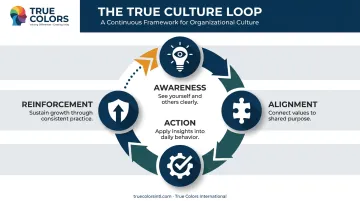
True Colors structures this ongoing work around what it calls the True Culture Loop:
- Awareness — Teammates learn their own communication style and how it shows up under stress
- Alignment — The team builds shared expectations for how decisions and feedback happen
- Action — That shared language shows up in real meetings and daily work, not just training sessions
- Reinforcement — Ongoing coaching and internal champions keep the habits alive after the workshop ends
Layer this onto your team's existing activity rhythm instead of treating it as a one-time event. If your remote calendar is full of games but short on shared vocabulary for how people work, start with True Colors International's virtual team-building workshops.
Conclusion
Virtual team building is no longer optional. For remote and hybrid teams, it's basic infrastructure for connection and productivity.
Start small. Pick one quick win from this list, run it consistently for a month, and ask your team what worked. Build from there.
When you're ready to move past one-off events toward culture that sticks, True Colors International can help you build shared language and stronger team dynamics on top of the activities you choose.
Frequently Asked Questions
What are some good virtual team building activities?
Quick icebreakers, trivia challenges, and collaborative games like Pictionary or Codenames work for most team sizes and need minimal setup. Mix short and longer formats so every personality type can engage.
What are some quick fun team building activities?
This or That, emoji check-ins, and Two Truths and a Lie all run in 5–10 minutes. They're ideal for opening a meeting without eating into the agenda.
How long should a virtual team building activity be?
Meeting warm-ups work best at 5–15 minutes. Dedicated bonding events like escape rooms or talent shows usually need 30–60 minutes.
How often should remote teams do team building activities?
Run quick icebreakers weekly, mid-length activities like trivia or coffee chats monthly, and larger events like Live Shows or scavenger hunts quarterly.
What tools do I need for virtual team building?
The core toolkit is a video conferencing platform, a shared whiteboard tool, and one or two browser-based game platforms like Kahoot or Jackbox.
How can personality assessments improve virtual team building?
Tools like True Colors give teams a shared language for communication styles. That vocabulary cuts down on misreads in chat and meetings long after the activity ends.