Introduction
Most leadership teams still treat pay raises as the retention fix-all. The data tells a different story.
MIT Sloan researchers analyzed 34 million employee profiles and 1.4 million Glassdoor reviews during the height of the Great Resignation. Their conclusion: toxic culture was 10.4 times more powerful than compensation in predicting which companies lost employees fastest, according to MIT Sloan Management Review.
Yet many organizations keep chasing retention through bonuses, ping-pong tables, and one-off "culture days." The real problem is simpler: a mismatch between how employees want to work and how they're actually managed.
This article breaks down what actually drives people to stay: the cultural factors that build loyalty, the personality-based communication gaps most companies never diagnose, and specific steps to fix both.
Key Takeaways
- Toxic or misaligned culture predicts turnover more reliably than compensation does
- Employees stay when they experience purpose, growth, recognition, and trust through honest communication
- Personality and communication-style mismatches drive attrition, even in well-meaning teams
- Retention-focused culture comes from consistent leadership habits, not annual initiatives
Why Workplace Culture Has Become the #1 Retention Lever
Employee expectations shifted permanently after 2020. Belonging and daily experience now compete directly with paychecks for top talent's attention.
SHRM's 2024 global workforce study found 52% of employees in good cultures cited culture itself as a reason to stay, compared to 50% who cited competitive pay. That's a statistical tie, and it marks a real shift from the pay-first assumptions most HR strategies were built on.
The Real Cost of Losing People
Turnover isn't just an HR line item. SHRM estimates the average cost per hire at nearly $4,700, and that figure only covers recruitment.
The Work Institute's 2024 Retention Report pegs total turnover cost at roughly 33.3% of a departing employee's base salary once training time and lost institutional knowledge get factored in.
The Job-Search Gap Tells the Real Story
Culture quality doesn't just correlate with satisfaction scores. It predicts who's already halfway out the door.
According to SHRM's research on workplace culture and retention:
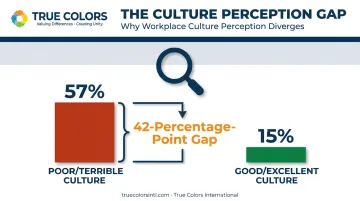
- 57% of employees rating their culture as poor or terrible were actively job hunting or planning to soon
- 15% of employees in good or excellent cultures said the same
- That's a 42-percentage-point gap between the two groups
The Ripple Effect Nobody Budgets For
When one person leaves, the damage doesn't stop with their exit interview. Picture a five-person team losing its most experienced member.
Remaining staff absorb the workload, morale dips, and newer hires start questioning leadership's stability. That erosion often triggers the next resignation before the first replacement is even hired.
The Core Cultural Factors That Keep Employees Engaged and Loyal
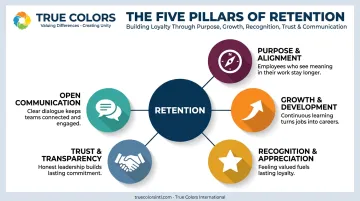
Retention rests on five interlocking factors. Organizations that only pull one or two tend to plateau.
Purpose and Alignment with Company Mission
Employees who genuinely connect with why their work matters don't job-hunt as often. Gallup found that a 10% improvement in employees' connection to organizational mission is associated with an 8.1% decrease in turnover.
Purpose can't be a poster in the break room. It has to show up in how work gets assigned, discussed, and recognized.
Growth and Development Opportunities
Stagnation pushes good employees out the door faster than almost anything else. Common growth levers include:
- Formal training and skill certifications
- Stretch projects outside someone's usual scope
- Internal mobility between teams or departments
- Mentorship pairings with senior staff
Employees don't need a promotion every year. They need visible proof that standing still isn't the only option.
Recognition and Appreciation
This is where the data gets striking. A longitudinal Gallup and Workhuman study tracked nearly 3,500 employees from 2022 to 2024 and found that well-recognized employees were 45% less likely to have changed organizations two years later.
Employees who received recognition meeting at least four of five quality markers were 65% less likely to be actively job searching. Generic "employee of the month" plaques don't cut it. Specific, timely, peer-driven recognition does.
Trust, Transparency, and Consistent Integrity
Employees forgive a lot when leadership is honest about setbacks. What they don't forgive is finding out later they were misled. Trust erodes fastest through:
- Overpromising and underdelivering on commitments
- Enforcing policies inconsistently across teams
- Deciding without explanation
Consistency matters more than perfection here.
Open and Honest Communication
Employees in good or excellent cultures were 7 times more likely to report open, honest communication with their manager, per SHRM's global culture research. That gap alone explains a lot of why some teams retain people for years while others churn every 18 months. Personality-based frameworks like True Colors' shared-language approach give teams a common vocabulary for these conversations, turning that abstract goal into a daily habit rather than a policy statement.
The Overlooked Culture Killer: Misaligned Communication and Personality Differences
Here's what most retention strategies miss entirely: culture breakdowns rarely start with bad intentions. They start with mismatched communication styles that nobody named out loud.
Consider a common scenario. A self-directed project manager assumes "autonomy" means minimal check-ins. Their manager, who values frequent updates, interprets the same word completely differently. Neither person is wrong. By month two, the manager is issuing corrective coaching while the employee feels micromanaged. Trust erodes fast, even though neither side acted in bad faith.
Personality-blind hiring and management create this friction repeatedly:
- Managers assume their communication style is the "normal" one
- New hires get onboarded without any framework for explaining how they work best
- Teams attribute style differences to attitude problems instead of temperament
This is where personality-based frameworks earn their place in a retention strategy. Rather than guessing at why two competent people keep clashing, teams get a shared vocabulary for naming the difference and working around it.
True Colors International has spent more than 45 years building exactly this kind of framework. Its personality-spectrum methodology is validated through an ASI-certified study with a 10,000-person sample, built to meet EEOC 80% guideline standards. The result is a simple, color-based language (orange, gold, green, blue) that teams use to describe communication preferences without judgment.
That awareness only sticks if it's reinforced. True Colors structures this through what it calls the True Culture Loop: awareness, alignment, action, and reinforcement. The cycle turns a one-time workshop insight into an ongoing leadership habit, rather than something employees forget by the following quarter.
How to Build a Culture That Retains Top Talent: Actionable Strategies
Building these factors into daily operations takes deliberate effort. A few concrete starting points:
- Run regular one-on-ones and team check-ins. Weekly or biweekly cadence surfaces concerns before they become resignation letters.
- Build structured, peer-to-peer recognition. Formal programs work, but so do simple habits like a Slack channel for shout-outs.
- Align hiring and onboarding with cultural fit from day one. Tools like True Colors' Talent Selection Assessments can flag communication-style mismatches before a bad fit ever gets a start date.
Organizations that treat culture-fit assessment as part of the hiring pipeline, not an afterthought, spend far less time managing the friction that mismatched hires create.
Measuring Whether Your Culture Investment Is Working
Culture initiatives without measurement are just guesses with good intentions.
Track these over time:
- Turnover and retention trends alongside each culture initiative's rollout date
- Stay interviews, not just exit interviews, to learn why people choose to remain
- Engagement survey scores segmented by team or department
Structured employee experience surveys, like those True Colors International builds, make these patterns easier to track.
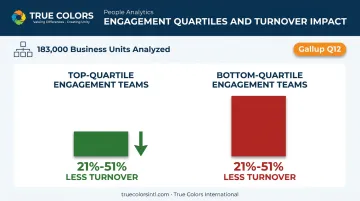
For context, Gallup's Q12 meta-analysis of over 183,000 business units found that top-quartile engagement teams had 21% to 51% less turnover than bottom-quartile teams, depending on the organization's baseline turnover rate. That's a useful benchmark for gauging whether your own numbers are moving in the right direction.
Don't expect overnight results. Culture shifts show up gradually, and the honest answer is that timelines vary by organization, team size, and how consistently leadership follows through.
Frequently Asked Questions
What is the biggest factor influencing employee retention?
Research consistently shows workplace culture, particularly toxic or misaligned culture, outweighs compensation as a predictor of turnover. MIT Sloan found toxic culture was over 10 times more predictive than pay during recent turnover spikes.
How does company culture affect employee turnover rates?
Culture shapes daily trust, communication, and belonging, all of which directly influence whether someone stays or starts job hunting. Employees in poor cultures are far more likely to be actively looking for another job than those in strong ones.
Can improving culture reduce turnover without raising salaries?
Yes. Recognition, growth opportunities, and trust have all shown measurable associations with retention independent of pay increases. Pay still matters, but it's not the only lever available.
What role does leadership play in shaping workplace culture?
Leaders set the tone for communication style, trust, and recognition across their teams. Their behavior, more than any policy document, determines whether culture strengthens or weakens over time.
How can personality assessments improve workplace culture?
Personality-based tools like True Colors' framework give teams a shared, non-judgmental language for discussing communication and work-style differences. That shared vocabulary reduces the kind of misunderstandings that erode trust.
How long does it take to see a positive change in retention after improving culture?
Culture change happens gradually rather than overnight. Organizations should expect to track engagement and retention trends over multiple quarters rather than expecting immediate shifts.