Introduction
A manager notices a pattern: missed deadlines, a sharp tone in meetings, complaints from teammates. Weeks pass. The conversation keeps getting pushed to "next week" because it feels easier to hope the problem fixes itself.
It rarely does.
Sixty-nine percent of managers say they're often uncomfortable communicating with employees, and 37% specifically dread giving direct feedback when they expect a negative reaction, according to a Harris Poll survey conducted for Interact. Avoidance feels safer in the moment. It lets small issues calcify into bigger ones and erodes trust with the team watching how you handle it.
This guide walks through a practical approach to these conversations:
- What to prepare before you sit down
- Hidden factors that determine whether feedback lands
- Common mistakes that sabotage good intentions
- How to handle scenarios that go sideways
TL;DR
- Preparation, not improvisation, determines whether a difficult conversation succeeds
- An employee's communication style shapes how feedback is received—most managers overlook it
- Separating behavior from character keeps the conversation productive instead of personal
- A measurable action plan and consistent follow-up turn a one-time talk into real change
How to Have Difficult Conversations With Employees
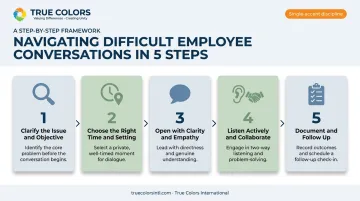
Step 1: Clarify the Issue and Your Objective
Before you say a word to the employee, get specific with yourself. What exactly happened? Use documented facts and dates, not vague impressions or secondhand accounts.
- Define the behavior: What was said or done, and when?
- Define success: Are you aiming for a behavior change, a performance improvement, or a resolved conflict?
- Check policy: Does this touch attendance, conduct, or another documented policy you should reference?
Walking in with a clear objective keeps you from rambling or letting the conversation drift.
Step 2: Choose the Right Time and Setting
Hold these conversations one-to-one and in private. A face-to-face setting signals the issue is being taken seriously, and room layout can make the meeting feel more or less threatening.
Practical guidelines:
- Book a private room or a video call with cameras on for remote teams
- Avoid Friday afternoons or high-stress weeks
- Never do this over lunch or in a shared workspace
- Loop in HR or another manager as a witness if the issue involves a policy violation or a serious accusation
Step 3: Open with Clarity and Empathy
Skip the small talk that creates false comfort. Instead, try something direct: "Do you have a few minutes? I want to talk through some feedback."
Then deliver the message using specific, factual language. Focus on behavior and impact, not character. "You missed three deadlines this month" lands very differently than "You're unreliable."
Manage your own state while you talk. Stay objective, avoid absolute language like "always" or "never," and pause if things get heated rather than pushing through.
Step 4: Listen Actively and Collaborate on a Solution
This is where most managers rush. Ask open-ended questions to understand what's actually going on. There may be a factor you're not aware of—a personal issue, unclear expectations, or a conflict with a coworker.
Practice reflective listening: paraphrase what you heard before responding. This single habit reduces defensiveness because the employee feels heard instead of lectured.
From there, build the solution together rather than dictating one. A plan the employee helped shape is a plan they're more likely to follow.
Step 5: Document and Follow Up
Summarize what was agreed to in writing, including expectations and deadlines, so both of you have the same reference point. Then schedule a specific follow-up date, not a vague "let's check in soon."
- Put next steps and deadlines in writing
- Set a follow-up meeting within a reasonable window (typically 2-4 weeks)
- Acknowledge improvement when you see it, not just corrections
Skipping this step is the single most common reason the same issue resurfaces a few months later.
Before You Begin: Timing and Preparation
The outcome of a difficult conversation is often decided before you ever sit down, based on timing and how ready you are.
When Should You Have the Conversation?
Address issues as soon as you spot them. It's better to nip a problem in the bud than let it become entrenched. Early conversations tend to be shorter, calmer, and far less charged than ones delayed for months.
Watch for signs it's time to move from an informal chat to a formal, documented conversation:
- The behavior has repeated after an earlier discussion
- It involves a clear policy violation
- It's now affecting the wider team, not just the individual
What You Need Before the Conversation
Gather your evidence first: performance data, specific dated examples, or witness accounts—not general impressions.
Mentally rehearse the conversation, or better yet, role-play it with a trusted colleague. Think through how the employee might react and how you'll respond if they get defensive, emotional, or quiet.
Key Factors That Affect the Outcome of a Difficult Conversation
Even a well-prepared conversation can fall apart if you overlook a few underlying factors.
Setting and Privacy
Employees are more open and less defensive in private, distraction-free settings. A public or rushed setting raises the odds of shutdown or escalation.
Emotional Self-Awareness
Unmanaged emotions—your own hot buttons—can turn feedback into a personal conflict. Spotting what triggers you ahead of time keeps the focus on the work issue, not your frustration.
Communication and Personality Style Differences
How you deliver feedback matters as much as what you say. Some employees want directness. Others need context and reassurance before they can hear anything critical.
True Colors International's personality assessment breaks communication style into four temperament types, and each responds differently to corrective feedback:
- Orange (action-oriented): Wants it concise, practical, and tied to real-world outcomes
- Gold (organized): Needs structure, clear expectations, and specific action items without interruption
- Blue (relationship-oriented): Needs rapport and trust established before the message lands
- Green (analytical): Wants direct, logical reasoning without emotional framing or implied meaning
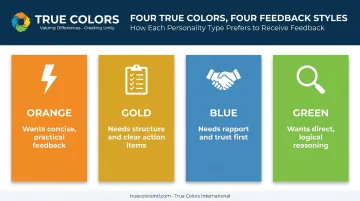
A manager can say the right thing and still miss the mark if the delivery doesn't fit the person. Matching tone and structure to temperament is a core part of how True Colors trains leaders on conflict navigation—one reason Fortifi Bank, a Wisconsin client, ran a Conflict Navigation Workshop for managers after its personality-awareness rollout.
Quality and Specificity of Documentation
The Society for Human Resource Management (SHRM) advises documenting the conduct, not the individual, with specific dates and details. Vague or anecdotal feedback invites disagreement; specific documentation shortens the conversation and speeds up resolution.
Organizational Consistency
Employees notice how similar issues get handled across the team. When enforcement is consistent, documentation supports fairness and credibility. When it isn't, trust erodes—and you may face real legal exposure.
Common Mistakes to Avoid
Even experienced managers fall into predictable traps:
- Skipping preparation: Relying on memory or assumptions instead of documented facts
- Over-softening the message: Wrapping the feedback in so much cushioning that the employee misses how serious it is
- Attacking character instead of behavior: "You don't care about this job" instead of "This report was submitted three days late"
- Waiting for the annual review: Saving feedback for once a year instead of addressing issues as they arise — employees who get weekly feedback are 3.6 times more likely to feel motivated to do great work, per Gallup research
- No follow-up: Without a documented plan and a check-in date, the same issue often resurfaces within months
Troubleshooting Common Difficult Conversation Scenarios
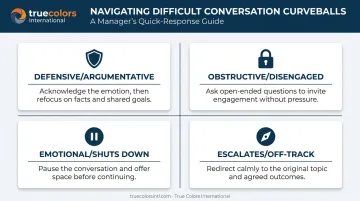
Even well-planned conversations go off script. Here's how to respond to the most common curveballs:
The employee becomes defensive or argumentative. They likely feel blindsided or think the feedback is unfair. Try this:
- Use "both/and" language (e.g., "I hear your concern, and we still need to address the missed deadline")
- Acknowledge their perspective without dropping the issue
- Redirect to specific facts and shared goals
The employee is obstructive or refuses to engage. This often signals unresolved frustration or a pattern of feeling unheard. When this happens:
- Ask direct, open-ended questions to find the root cause
- Restate expectations clearly
- Set a follow-up deadline with documented consequences
The employee becomes emotional or shuts down. Feedback that touches on competence or job security can trigger this. Pause the conversation. Give space to regroup, then resume once both of you are calm. Don't push through.
The conversation escalates or drifts off track. This usually happens without a clear objective, or when the discussion wanders into unrelated grievances. Gently redirect to the original purpose. If it stays unresolved, schedule a follow-up with a tighter agenda and a defined outcome.
Frequently Asked Questions
How do I prepare for a difficult conversation at work?
Clarify the issue using documented facts, define your objective, choose a private setting, and anticipate how the employee might react.
How do you deal with an obstructive employee?
Obstructive behavior usually signals unresolved frustration or fear, not simple defiance. Ask direct questions to uncover the cause, restate expectations clearly, and set a documented timeline with consequences.
What are the 4 C's of difficult conversations?
A common framework from ted Learning is Clarity, Curiosity, Compassion, and Courage. State the issue and desired outcome clearly, ask genuine questions, respect the person's dignity, and have the conversation instead of avoiding it.
How do you start a difficult conversation with an employee?
Skip the small talk. Ask directly if they have a moment for feedback, then move quickly into specific, fact-based observations rather than building up slowly.
Should HR or another manager be present during a difficult conversation?
For serious policy violations or accusations, yes, bring a witness. For routine performance feedback, the direct manager typically handles it alone. Either way, never include another employee in the room.
What should you do if an employee becomes emotional during the conversation?
Pause. Give them space to regroup, and resume once both of you are calm. Pushing through heightened emotion rarely leads to a productive outcome.