Introduction
Picture a new hire's first day: no office lobby to walk into, no coworker to wave them toward the coffee machine, no manager reading their body language during that first team meeting.
Instead, they're staring at a laptop, waiting for a Zoom link and hoping their VPN access works.
This is remote onboarding in 2025, and it's no longer a niche scenario. According to SHRM's 2025 Employee Benefits Survey, 60% of U.S. employers now offer hybrid work arrangements. Remote and hybrid teams aren't the exception anymore.
Yet most onboarding programs were built for a hallway-and-handshake world. That mismatch shows up fast: confused new hires, slow ramp-up, and avoidable early exits.
Fixing that mismatch starts with a structured approach. This article breaks down the five stages of remote onboarding, the 30-60-90 day framework, and why intentional culture-building, not just checklists, determines whether remote hires stick around and thrive.
Key Takeaways
- Structured onboarding speeds up time-to-productivity and lowers early turnover risk
- The 5 stages guide new hires from pre-boarding through full team integration
- A 30-60-90 day framework turns the first three months into measurable milestones
- Culture and human connection determine whether remote hires feel like they belong
- Personality-based communication tools build trust faster than generic checklists
What Is Remote Employee Onboarding?
Remote employee onboarding is the process of integrating new hires who work from home or another offsite location. It replaces in-person handshakes and desk setups with digital tools, video calls, and virtual documentation.
It covers everything a new employee needs to become productive and connected, just delivered through a screen instead of across a conference table.
How It Differs From Traditional Onboarding
Traditional onboarding leans on physical presence. Remote onboarding replaces each touchpoint with a digital equivalent:
- Welcome emails and video messages replace face-to-face greetings
- Shipped laptops and equipment kits replace desk setup on day one
- Virtual meet-and-greets replace hallway introductions
- Digital handbooks and e-signatures replace paper packets
SHRM notes that effective virtual onboarding should never be a "one-and-done" video call. It works best as a series of interactive sessions spread across the first weeks, not a single event.
One Size Doesn't Fit All
Remote onboarding has to flex based on how someone actually works:
- Full-time remote hires need heavier investment in virtual relationship-building since they may never set foot in an office
- Hybrid employees need a blend of in-person orientation days and remote training modules
- Distributed teams across time zones need asynchronous resources so no one waits 12 hours for an answer
The underlying goal stays the same across all three: helping someone feel capable and connected quickly.
Why Remote Onboarding Matters: Benefits & Challenges
Getting remote onboarding right isn't just a nice-to-have. In BambooHR and TalentLMS's 2025 onboarding benchmarking report, 73% of employees who went through hybrid onboarding said it helped them contribute faster.
The same survey found a less flattering number: 39% had second thoughts about their new job during onboarding, and 32% finished the process disappointed.
That gap, between what good onboarding can achieve and what most companies actually deliver, is where the real opportunity sits.
The Benefits of Getting It Right
When onboarding is deliberate rather than an afterthought, organizations typically see:
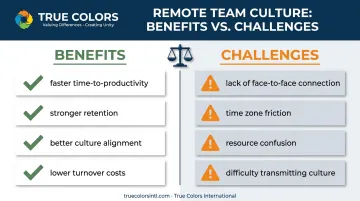
- Faster time-to-productivity as new hires understand tools and workflows sooner
- Stronger retention, since early confusion and isolation get addressed head-on
- Better culture alignment because expectations are communicated early, not assumed
- Lower turnover costs, avoiding the expense of rehiring within the first year
The Challenges Unique to Remote Settings
Remote onboarding introduces challenges that simply don't exist in an office:
- Lack of face-to-face connection makes it harder to read tone or ask a quick question
- Time zone friction can delay answers by a full workday
- Resource confusion happens when new hires don't know which channel or person has the answer
- Difficulty transmitting culture, since values that used to spread through observation now have to be explained explicitly
Here's the part that often gets missed: most of these challenges aren't really about logistics. They're about communication and personality-style mismatches.
An analytical new hire might feel lost in a culture built around fast, big-picture conversations, while a relationship-driven one might feel cold in a team that communicates purely through async docs.
Fixing the tech stack solves half the problem. The other half requires teams to understand how different people actually communicate, which is exactly where personality-based frameworks come in. True Colors International's system, for example, gives new hires and their teams a shared language for these differences from day one.
The 5 Stages of Remote Employee Onboarding
These five stages build progressively. Skip one, and the gap doesn't disappear; it resurfaces later as disengagement, confusion, or an early exit.
Stage 1: Pre-Boarding
- Send welcome communications outlining what to expect on day one
- Ship equipment and set up system access in advance
- Share culture materials, team bios, and company history before the start date
Stage 2: Orientation (Day One)
- Host a virtual welcome session with HR and the direct manager
- Complete compliance paperwork digitally, before the first meeting even starts
- Introduce the new hire to immediate teammates through a scheduled video call
Stage 3: Training & Early Engagement (Week One)
- Assign an onboarding buddy, a peer (not the manager) for informal questions
- Start role-specific training tied to real tasks, not just generic modules
- Schedule short, frequent check-ins to catch confusion early
Stage 4: Integration & Performance Alignment (First 30–90 Days)
- Hold regular one-on-ones that go beyond status updates
- Review progress against early goals, adjusting where needed
- Deepen immersion into team culture through shared projects
Stage 5: Ongoing Development & Retention
Onboarding doesn't end at 90 days; it shifts into continuous growth:
- Extend mentorship relationships past the formal onboarding window
- Build feedback loops that catch disengagement before it becomes resignation
- Hold career development conversations that show the role has a future
The 30-60-90 Day Onboarding Framework for Remote Employees
This framework gives new hires and managers a shared map: clear, time-bound milestones for learning, contributing, and eventually owning a role. Without it, "how am I doing?" becomes a guessing game.
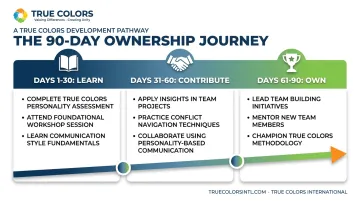
First 30 Days: Learn
The focus here is absorption, not output:
- Complete required training and compliance modules
- Learn the tools, systems, and workflows behind daily work
- Build initial relationships with the manager and team through regular check-ins
Days 31–60: Contribute
- Take on real tasks tied to actual team goals
- Receive structured feedback on early work, not just a pat on the back
- Participate in team projects that require collaboration, not solo tasks
Days 61–90: Own
- Set longer-term goals tied to the role's actual responsibilities
- Shift from asking for direction to proposing solutions
- Complete a formal 90-day review that sets the tone for the next year
Implementing this framework is critical because the first three months are a make-or-break period. The stakes are high: BambooHR's onboarding research found that 31% of employees leave a job within six months, with 68% of those departures happening in the first 90 days.
This data shows that the first 90 days aren't just a formality—they're the window where most employee flight risk is concentrated.
That's exactly why the "Own" phase matters. A new hire who reaches day 90 with real ownership over their work, rather than lingering uncertainty, is far less likely to be quietly job hunting.
Best Practices for Remote Onboarding: The 5 C's and a Culture-First Approach
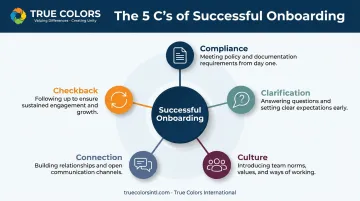
Checklists get new hires through paperwork. They rarely get new hires to feel like they belong. The "5 C's" address both: Compliance, Clarification, Culture, Connection, and Checkback.
Compliance
Digitize everything that used to require a signature in an HR office: policy acknowledgments, tax forms, benefits enrollment, legal requirements. Ideally, all of it is complete before day one, not competing with a new hire's attention on their first morning.
Clarification
Remote settings amplify ambiguity. A vague expectation that would get clarified over lunch in an office can linger for weeks online. Clearly defined roles, deliverables, and communication protocols prevent the miscommunication that's common when teams never share a physical room. That includes knowing who to message for what and how fast to expect a reply.
Culture & Connection
Culture doesn't transmit automatically when there's no office to absorb it from. It has to be built on purpose, through shared language and a mutual understanding of how people actually communicate.
This is where personality-based programs earn their place in onboarding. True Colors International's assessment methodology, for example, gives new hires and their teams a shared vocabulary for recognizing communication and work styles within the first weeks on the job. Instead of guessing why one teammate prefers detailed written instructions while another wants a two-minute call, everyone works from the same framework.
The assessment is ASI-certified and has been applied across corporate, healthcare, education, and government settings for more than 45 years. That track record gives organizations a research-backed option for building connection into onboarding rather than leaving it to chance.
Checkback
Structured feedback loops confirm whether the other four C's actually stuck:
- Buddy check-ins during the first weeks catch small confusions before they grow
- Manager reviews at 30, 60, and 90 days track both performance and sentiment
- Anonymous pulse surveys surface friction a new hire might not raise directly
Companies that pair structured checklists with intentional culture-building tend to see stronger long-term retention than those relying on paperwork alone. Poor culture fit is consistently cited as a leading reason remote employees disengage or leave within their first year. That makes Culture & Connection the C most worth prioritizing.
Frequently Asked Questions
How do I onboard a new remote employee?
Prepare equipment, system access, and welcome materials before day one, host a structured orientation, assign an onboarding buddy, and follow up with regular check-ins through the first 90 days.
What is the 30-60-90 day onboarding process for remote employees?
It's a three-phase framework: the first 30 days focus on learning tools and workflows, days 31–60 shift toward contributing real work, and days 61–90 focus on full ownership and a formal review.
What are the 5 stages of onboarding remote employees?
Pre-boarding, orientation on day one, training and early engagement in week one, integration and performance alignment through the first 90 days, and ongoing development afterward.
What are the 5 C's of onboarding remote employees?
Compliance, Clarification, Culture, Connection, and Checkback, a framework that pairs administrative essentials with the relationship-building remote teams often miss.
How long should remote onboarding take?
Formal onboarding typically spans the first 90 days, but culture integration and relationship-building continue well beyond that milestone.
How can personality assessments improve remote employee onboarding?
Tools like True Colors help new hires and teams quickly recognize each other's communication and work styles, closing the connection gap that remote settings tend to create.