Most leaders know their culture needs to shift. What trips them up is the sheer number of competing frameworks. Lewin, Kotter, Schein, ADKAR, the 5 C's, the 5 R's — without a clear model to anchor the effort, change initiatives become ad hoc, inconsistent, and easy for employees to ignore.
This article breaks down the most established culture change models, explains the 5 C's and 5 R's frameworks, and introduces a personality-based approach designed to make new cultural norms actually stick.
Key Takeaways
- A culture change model gives organizations a structured path from today’s culture to a desired future state
- Core frameworks include Lewin’s Unfreeze-Change-Refreeze, Kotter’s 8 Steps, Schein’s Three Levels, and ADKAR
- The 5 C’s and 5 R’s work as success-factor checklists, not full step-by-step methodologies
- Lasting change aligns individual personalities and behaviors with organizational values—not process steps alone
- Pairing a model with personality-based tools like True Colors’ True Culture Loop improves adoption and retention
What Is an Organizational Culture Change Model?
A culture change model is a structured framework that guides how an organization diagnoses, plans, and implements shifts in shared values, beliefs, and behaviors. It replaces guesswork with a repeatable process.
Why does this matter? Unstructured change rarely holds.
Prosci's 2023 analysis of over 2,600 change practitioners found that projects with poor change management hit just 13% of their objectives. Those with excellent change management hit 88%. That gap comes down to the quality of the approach, not luck or budget.
Culture change models generally fall into two categories:
- Process-based models that sequence the steps of change, such as Lewin, Kotter, and ADKAR
- Diagnostic or values-based models that map the culture itself, such as Schein's framework and the Competing Values Framework (OCAI)
The most effective transformations use one from each category. You diagnose the gap, then execute a process to close it.
Top Organizational Culture Change Models Explained
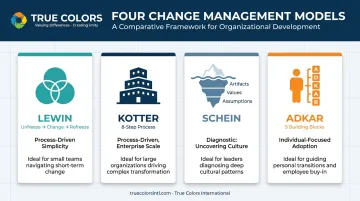
Four models dominate how organizations approach culture change. Each answers a different question: how to sequence the work, how to scale it, what culture is made of, and how individuals adopt new norms.
Lewin's Three-Step Change Model
Kurt Lewin's model breaks change into three stages:
- Unfreeze: Build urgency and awareness that the current culture no longer serves the organization
- Change: Implement new behaviors and processes, supported by coaching and communication
- Refreeze: Reinforce and institutionalize the new norms so they don't slide back
Lewin's original theory wasn't limited to small changes, but in practice, it's best suited for communicating change conceptually or managing smaller, well-defined shifts. Its simplicity is the appeal. It's easy to explain to a leadership team in five minutes, which makes it a great starting vocabulary even if you layer a more detailed model on top.
Kotter's 8-Step Change Model
John Kotter's model is built for scale. The eight steps are:
- Establish a sense of urgency
- Build a guiding coalition
- Form a strategic vision
- Enlist a volunteer army
- Enable action by removing barriers
- Generate short-term wins
- Sustain acceleration
- Institute the change
Kotter's own methodology states that large-scale change requires significant numbers of people rallying around a shared opportunity. That makes it a strong fit for enterprise-wide transformations spanning multiple departments, where sustained momentum matters more than speed.
Schein's Organizational Culture Model
Edgar Schein approaches culture differently. Rather than sequencing change, he maps what culture actually consists of, across three levels:
- Artifacts: Visible symbols, behaviors, and structures (dress code, office layout, rituals)
- Espoused values: Stated beliefs, mission statements, and official policies
- Underlying assumptions: Unconscious, taken-for-granted beliefs that drive real behavior
Schein's core insight: lasting change has to reach underlying assumptions, not just surface artifacts. Repainting the break room or updating a values poster changes nothing if the unspoken assumptions stay intact. He argued this requires psychological safety first. People need assurance that learning something new won't cost them their identity or competence before they'll unlearn old habits.
Prosci ADKAR Model
ADKAR zooms in on the individual, not the organization. Its five building blocks are:
- Awareness of why change is needed
- Desire to support and participate in it
- Knowledge of how to change
- Ability to implement new skills and behaviors
- Reinforcement to sustain the change
Organizational culture doesn't shift in bulk. It shifts one person at a time, and each person needs all five elements in place. A team can have plenty of awareness and zero ability, and the change stalls anyway.
The 5 C's and 5 R's of Culture Change
These aren't full methodologies. Think of them as quick diagnostic checklists that reveal whether a change effort is missing something obvious.
The 5 C's of Culture Change
Most versions land on the same five factors:
- Clarity on what the new culture actually looks like day to day
- Commitment from leadership that outlasts the initial announcement
- Communication that repeats the message across every channel
- Collaboration across departments instead of top-down mandates
- Consistency between stated values and actual decisions
The exact terms vary depending on the source. What matters is the job they do: these are interpersonal success factors, not a sequence you run step by step.
The 5 R's of Culture Change
Prosci defines this framework as a readiness assessment with five components:
- Risk: What happens if the initiative fails or stalls
- Resistance: Where pushback is likely to come from and why
- Resources: What budget, time, and people the effort actually needs
- Roles: Who owns which piece of the rollout
- Roadmap: The sequence and timeline for execution
The 5 R's work best as a pre-flight check. Run it before launching Kotter's coalition or an ADKAR rollout, and you'll catch gaps in planning that would otherwise surface as mid-project chaos.
The True Culture Loop: A Personality-Based Model for Sustainable Change
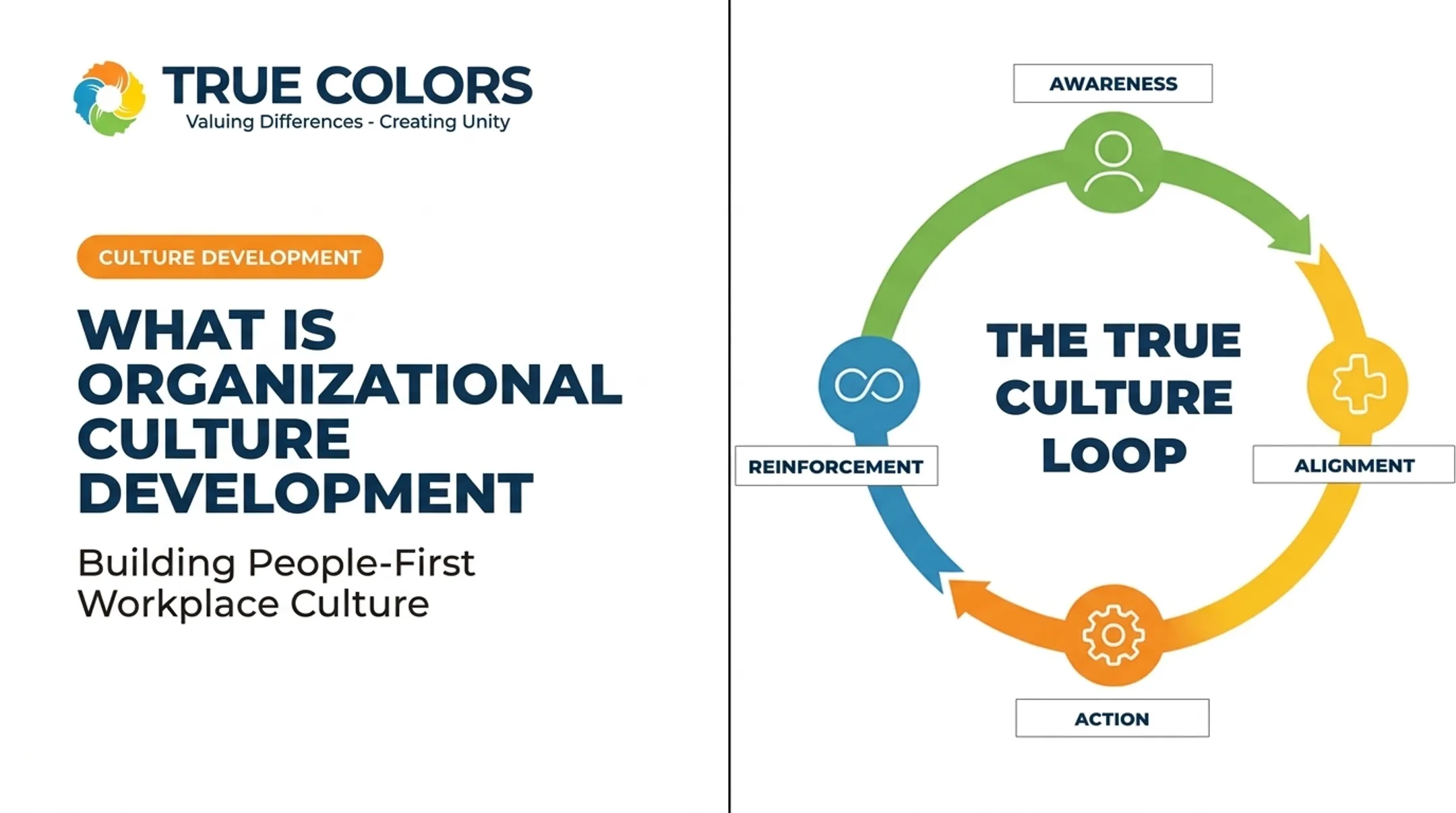
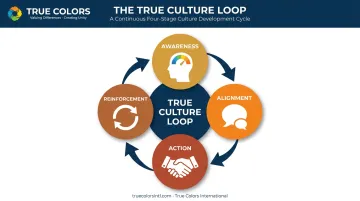
Every model above shares a blind spot: they focus on process steps, not the people executing them. True Colors International built the True Culture Loop to close that gap. It's a continuous, four-stage framework rooted in individual personality differences rather than a linear project plan:
- Awareness
- Alignment
- Action
- Reinforcement
Awareness starts with an ASI-certified personality assessment, not a strategy deck. Employees and leaders build self-awareness of their own and others' temperament styles first. At the University of Texas Permian Basin, staff reported becoming "more self-aware in our communications and interactions" after this stage, with skills they described using daily.
Alignment is where teams adopt a shared language around communication and collaboration. Paige Fox of Fox Auto Team described the shift bluntly: her team had assumed everyone processed information the same way, and recognizing the differences was "the biggest aha."
At Shortcut Software, employees kept referencing True Colors language in decisions long after the initial workshop ended, evidence that the shared language actually stuck.
Action translates that awareness into behavior: hiring decisions, conflict resolution, and leadership development. Those practices are backed by SHRM- and HRCI-approved training tracks in Communication, Conflict Navigation, Team Building, Consultative Selling, and Teaching & Learning Styles.
Reinforcement skips the "refreeze" idea entirely. Instead of locking culture in place, this stage keeps it evolving through ongoing coaching and a nationwide network of certified Master Trainers and facilitators, including an exclusive tier of just 11 Elite Facilitators across the U.S.
Where Kotter and Lewin sequence organizational steps, the True Culture Loop treats individual personality differences as the engine of change. You can connect with a True Colors specialist to see how the loop applies to your specific team makeup.
How to Choose and Apply the Right Culture Change Model
Don't pick one model and force-fit your organization into it. Combine them by function:
- Diagnose first: Use Schein's three levels or the OCAI to map the gap between current and desired culture before you pick a process model
- Execute with a process model: Kotter for large, multi-department transformations; ADKAR when individual adoption is the bottleneck
- Sustain with a personality-based framework: Layer in the True Culture Loop so behaviors don't snap back once the initial push fades
The sequencing matters as much as the models themselves. A diagnostic shows what's broken. A process model maps how you move. Six months later, a personality-based framework is what determines whether people still show up differently.
Work with certified facilitators who tailor the rollout by department and industry instead of running one template company-wide. A hospital floor and a sales team both need culture change—but not the same conflict-resolution training.
Frequently Asked Questions
What is the model of culture change?
There's no single universal model. Organizations typically draw from several established frameworks, including Lewin, Kotter, Schein, and ADKAR, to diagnose, plan, and reinforce cultural shifts based on scale and starting point.
What is Schein's culture change model?
Schein's model maps culture across three levels: artifacts, espoused values, and underlying assumptions. He argued that lasting change requires psychological safety so people can unlearn old assumptions without feeling threatened.
What are the 5 C's of culture change?
The 5 C's commonly include Clarity, Commitment, Communication, Collaboration, and Consistency. They function as a checklist of interpersonal success factors rather than a complete step-by-step methodology.
What are the 5 R's of culture change?
Prosci's 5 R's are Risk, Resistance, Resources, Roles, and Roadmap. Each addresses a practical planning requirement that helps teams prepare before launching a change initiative.
How long does organizational culture change typically take?
According to SHRM's guidance on organizational culture change, meaningful change can take anywhere from months to several years. Treat it as an ongoing investment rather than a one-time project.
Can personality assessments really help drive culture change?
Yes. Personality-based tools build the self-awareness and shared language teams need to adopt new behaviors and keep them. True Colors International clients in technology, education, and hospitality use this approach to strengthen communication and sustain new cultural norms.